Wednesday, November 01, 2006

St. Maria Goretti - 1902

St. Maria Goretti is unique among the saints and martyrs of the Catholic Church, as the youngest saint ever to be canonised! At the time of her martyrdom, she was only eleven and a half years old.

Maria Goretti was born on October 16, 1890, to a very large, but poor, Italian family. Her family was so poor, in fact, that in order to make ends meet, her father, Luigi Goretti, had to make arrangements with another family, the Serenellis, to come and live on their farm, and do the farmwork with them, in order to make ends meet--to have enough food and a place to live!

As Maria grew up, she made a decision to live as God would want her to--to be good, and humble, and modest. She would take care of her younger siblings, and do thankless chores around the farm, even when no one asked. Around town, she was well-known for her good behaviour and her modesty. When, two years after they'd moved to the Serenelli farm, her father died of Malaria, St. Maria Goretti had to mature even more, and continued to serve her family and take care of her brothers and sisters.

When she was growing up, Catholic children received the Sacraments of Confirmation and Holy Communion in a different order than we do today. Maria would have been Confirmed around the age of six or seven, and would not receive the Eucharist until she was eleven. As her opportunity for First Communion approached, Maria took extra care to prepare herself to receive such an awesome gift: Jesus Christ, fully present, Body, Blood, Soul, and Divinity, in the Eucharistic bread and wine! She spent much time in prayer and spiritual reading, in order to make sure she was worthy of receiving such a precious gift! When the day came, her family said that it was the greatest moment, and highlight of her life!

But if St. Maria Goretti could be considered a model of saintly virtue, of love, compassion, and modesty, then another person on that farm was the exact opposite. The Serenelli family had a son, Alessandro. And Alessandro was not a good kid. In his teens, he got into the wrong crowd, and going with them to parties and other things, he lived a very wayward life. Alessandro was often violent, and got in trouble with the law on more than one occasion. On top of all this, he would occupy his free time reading and looking at very impure things, like pornography. All of these choices that Alessandro made, caused him to have a very skewed and troubled, and selfish, outlook on life. And when he looked at Maria as she grew up, he felt lust in his heart.

Alessandro would many times try to come on to Maria, trying to seduce her; but Maria, very conscious of God's instructions on the topic of sex, and very protective of her modesty and purity, would tell Alessandro, No, and remind him that God did not permit that kind of behaviour. But Alessandro wasn't interested in what God wanted, but only what he wanted. Over and over, he would try to tempt Maria, and over and over she would turn him down, reminding him of God's Laws. Finally, Alessandro wasn't going to take no for an answer any more, and on July 5th, 1902, he tried to force himself on Maria, in order to rape her. When she again struggled to resist him, telling him again that "This is a sin! God doesn't want this! You can go to hell for this, Alessandro!" he took a knife, and stabbed Maria with it fourteen times. Maria was quickly taken to the hospital, and Alessandro was taken to prison.

As Maria lay in the hospital overnight from July 5th to 6th, 1902, she held a medal of Our Lady, and a Crucifix. Over and over, she prayed for Alessandro, that God would have mercy on him! She kept praying for Alessandro's forgiveness until she died, and, truly, even afterward in Heaven.

Meanwhile, Alessandro, who was a minor when he committed his attack, was sentenced to 30 years in prison. While there, nothing changed, and he continued to be a selfish, violent prisoner. Often he would attack the guards, as well as other inmates. He would even attack the faithful priest who would come to visit him, in order to encourage him to repent and turn to God. This behaviour continued for thirteen years.

But one night, Alessandro had a vision. In that vision, he saw Maria Goretti in a field full of lilies--a flower that has traditionally symbolised purity. Maria was gathering up the lilies into a bouquet, and then walked up to Alessandro. She told him to take the lilies, and when he did, he said they turned into a still white flame that went into his heart. Alessandro awoke from that vision as a changed person.

The next day, when the priest came to see him--probably expecting to be beaten up--he found a calm and quiet Alessandro Serenelli. That day, Alessandro made a good Confession, and turned his life over to Jesus Christ. After he served out the rest of his sentence, Alessandro went to Maria's mother, and asked her forgiveness for his crime. Mrs. Goretti forgave Alessandro, and that year they attended Christmas Eve mass together. Alessandro afterwards became a Capuchin monk, and lived a life of purity, helping others to turn from their sinful lifestyles.

When the cause of Maria's beatification came up, Alessandro Serenelli testified to her life and purity, and told of his crimes against her. When in 1952, Pope Pius XII canonised her as a saint, her mother was there to witness it! On that occasion, the Pope said these words:
With splendid courage she surrendered herself to God and his grace and so gave her life to protect her virginity.

The life of a simple girl - I shall concern myself only with highlights - we can see as worthy of heaven. Even today people can look upon it with admiration and respect. Parents can learn from her story how to raise their God-given children in virtue, courage, and holiness; they can learn to train them in the Catholic faith so that, when put to the test, God's grace will support them and they will come through undefeated, unscathed, and untarnished.

From Maria's story carefree children and young people with their zest for life can learn not to be led astray by attractive pleasures which are not only ephemeral and empty but also sinful. Instead they can fix their sights on achieving Christian moral perfection, however difficult that course may prove. With determination and God's help all of us can attain that goal by persistent effort and prayer.

Not all of us are expected to die a martyr's death, but we are all called to the pursuit of Christian virtue.

So let us all, with God's grace, strive to reach the goal that the example of the virgin martyr, Saint Maria Goretti, sets before us. Through her prayers to the Redeemer may all of us, each in his own way, joyfully try to follow the inspiring example of Maria Goretti who now enjoys eternal happiness in heaven.
St. Maria Goretti again reminds us that the story of a martyr goes beyond their tragic death--but always impacts the lives around them, even their killers, as we see from the radical change Maria's example of purity, her willingness to die, and her prayers from heaven had on Alessandro Serenelli.

God bless.

Labels: , , , , , , , ,

Friday, May 12, 2006

Hypocritically Critical

Well, after a too-long hiatus from the Sermon on the Mount, as we got through Confirmations and then Easter, we're finally back to tackle Matthew chapter 7.

Matthew 7:1-6, 12
"Do not judge, and you will not be judged; because the judgements you give are the judgements you will get, and the standard you use will be the standard used for you. Why do you observe the splinter in your brother's eye and never notice the great log in your own? And how dare you say to your brother, 'Let me take that splinter out of your eye,' when, look, there is a great log in your own? Hypocrite! Take the log out of your own eye first, and then you will see clearly enough to take the splinter out of your brother's eye.
"Do not give dogs what is holy; and do not throw your pearls in front of pigs, or they may trample them and then turn on you and tear you to pieces...
"So always treat others as you would like them to treat you; that is the Law and the Prophets."
Here we come to what, in my opinion at least, is the most misused phrase of Scripture of all time (or, possibly, John 8:7, "Let the one among you who is guiltless be the first to cast a stone.") I hear it all the time when talking to people, or posting, or teaching about sin. "Did not Jesus say, 'Judge not lest ye be judged?' You have no right to tell me that I'm wrong! How can you call X a sin? You're so judgemental. Jesus told us not to judge, so you're being a hypocrite!"

It's nonsense like this that very often makes Christians timid about speaking the Gospel and drawing that firm line of righteousness vs. sinfulness. I've even heard some church leaders use this text as an excuse to be wishy-washy in their theology.

I said that this is a misuse of the text. More accurately, I think we could call it an abuse. Jesus is not telling us not to be critical in our decisions. He is not telling us not to judge good as good and evil as evil. He is not telling us to be moral pansies who never confront injustice or unrighteousness in this world! That interpretation would out and out contradict everything that Jesus did teach. No, Jesus did not tell us not to judge. He told us, again, as He has said throughout His Sermon, not to be a hypocrite. Just for a refresher, a hypocrite is someone who tells others to do something that they will not do, or someone who makes a show of doing something that he is in fact not doing. That is why Jesus did not say, "Do not judge," but, "Do not judge and you will not be judged." In other words, if you have sin in your own life that you are unwilling to repent of and change, then you do not have the right to judge that same sin (or, really, any sin) in another's life. Why? Because as Jesus makes clear in the next couple sentences, God will use on you the self-same standard that you used for another.

And just in case you missed His point, He makes it crystal clear in His analogy: "Why do you observe the splinter in your brother's eye and never notice the great log in your own? And how dare you say to your brother, 'Let me take that splinter out of your eye,' when, look, there is a great log in your own? Hypocrite! Take the log out of your own eye first, and then you will see clearly enough to take the splinter out of your brother's eye." He's making the point that not only don't we have the right, but we don't really even have the ability, the spiritual discernment, to help our brother in this situation. It's Jesus at His comical best, too.

Ever seen that sketch by the 3 Stooges, where Curly's got a long plank over his shoulder? In front of him, Moe's giving some direction, and all of a sudden, Larry says something, so Curly swings around and konks Moe one with the plank. When Moe yelps and crumples, Curly swings back around to see what's the matter, knocking Larry a good one. Just as Moe is recovering, Curly swings back to see what happened to Larry, whacking Moe a second time. This pattern goes on for some time until all the Nyuk-Nyuk, Why-I-oughta hyjinx ensues with someone getting his eyes poked, etc. etc.

Well, Jesus must have given the Stooges that idea, because what He describes pretty much plays out the same way:

Plank-Eye to Speck-Eye: Oh! Here, let me help you out with your speck!
Speck-Eye: What?! Look who's talking, you hypocrite!
Plank-Eye: No, really, here, hold still! (WHACK) Oops, sorry, almost got it. (WHACK) Hang on, now, just a little bit more (WHACK) ...
Speck-Eye: Ow, you jerk! Leave me the heck alone!


When we are hypocritically critical, we don't have the tenderness to lovingly help another person. And what happens instead is that we beat them up with their sinfulness, which is really our sinfulness, and really drive them farther away from Grace.

Instead, Jesus tells us, when we take the plank out of our own eye, through humility and repentance in the Sacrament of Reconciliation, and strive to live a purer life (albeit still imperfect) we can allow the Holy Spirit to work through us, and our humble, loving approach will allow us to actually help our brother. It will sound a lot less like, "Hey, you hell-bound sinner! Repent!" and a lot more like, "Hey, I've been there, too. Let's walk through this together." As Jesus said, "Then you will see clearly enough to take the splinter out of your brother's eye." Jesus doesn't say that we never try to help or talk against sin. In fact, He tells us that when we are willing and striving to deal with it in our own lives, we'll actually be able to help others in that way!

This is the spirit behind the Golden Rule of Matthew 7:12, to do unto others what you would want them to do unto you. It's about love, and gentleness, and humility. When we have that gentle humility and love for another, we are radiating Christ to them.

But still, there comes those times when, even when we're right with God, and trying to be humble and gentle, that we still won't get through to others. They, instead, will persist in their sinfulness and reject your words and actions. Jesus knows this. Heck, they did it to Him, too! So He warns us not to cast our pearls before swine, or give what is holy to the dogs (v. 6). In other words, if they won't listen, don't keep breaking your back to tell them! The truth is too valuable to waste! And when we persist in this, it will only cause them to hate and despise you, and your faith, all the more. Instead, back off and pray for them, because that's all you can do. Only God is able to change hearts. That's not your job.

God bless.

Labels: , , ,

Friday, August 26, 2005

The Seven Deadlies

I apologise for the lack of posting new talks recently. The popularity of the Open Q&A (below) caught me quite by surprise. But at 180 comments, it seems to have petered out. Though, I would point out, that it is still open! For now, I'd like to catch up on a talk we had a few weeks ago, on sin.

Since the Fall of our first parents, Adam and Eve, all of us have been born with what's called a "sinful nature". Basically, while Adam and Eve were created perfect by God, completely holy and just, their decision to sin affected their nature in such a way that that holiness and justice was destroyed in them. Because of that, they became subjected to ignorance, suffering, sin, and death. We kind of inherited that state. Our natures are wounded, and we are born with the desire to be sinful and with our hearts turned away from God.

Before our baptisms, we were completely alienated from God. We were outside of His family. But through baptism, and our faith and repentance, we enter into a life-giving relationship with God, and He fills us with His grace--the grace to live that life of holiness and justice that Adam and Eve lost. But our baptism didn't completely erase the consequences of sin. We still suffer and die. Our minds are still subject to ignorance, and we still have that pesky urge to sin. We are often tempted, and we constantly struggle.

So what is sin? It is an action (or lack of action) that violates God's law. At its heart, it is a rebellion against God, which says, "I know better", or "I don't care." Or, more famously expressed by Frank Sinatra, "I did it my way!"

There are degrees of sin, which the Church has labelled "mortal" and "venial" sins (1 John 5:16-17). A venial sin is one that only wounds our relationship with Christ, but does not kill it outright. We don't exclude ourselves from His Covenant with us. Mortal sins on the other hand, are just that: Mortal. They kill the life of grace within us. According to the Catechism of the Catholic Church, Mortal sin "destroys charity in the heart of man by a grave violation of God's law; it turns man away from God, who is his ultimate end and his beatitude, by preferring an inferior good to Him" (1855).

For a sin to be mortal, three conditions must be met: It must be a grave matter, committed with full knowledge and deliberate consent.
1858 Grave matter is specified by the Ten Commandments, corresponding to the answer of Jesus to the rich young man: "Do not kill, Do not commit adultery, Do not steal, Do not bear false witness, Do not defraud, Honour your father and your mother." [Mk 10:19] The gravity of sins is more or less great: murder is graver than theft. One must also take into account who is wronged: violence against parents is in itself graver than violence against a stranger.

1859 Mortal sin requires full knowledge and complete consent. It presupposes knowledge of the sinful character of the act, of its opposition to God's law. It also implies a consent sufficiently deliberate to be a personal choice. Feigned ignorance and hardness of heart [Cf. Mk 3:5-6; Lk 16:19-31] do not diminish, but rather increase, the voluntary character of a sin.


Venial sins can become mortal if we persist in them, and make a habit of them.

A further distinction in sin is known as the Capital sins, or more familiarly as the Seven Deadly Sins. These are "capital [head] sins" because they are the root or the cause of all other sins. They are Pride, Avarice (Greed), Envy, Wrath (Anger), Lust, Gluttony, and Sloth.

These are the sins in our lives that we need to watch for, because they are the causes of other sin in your life. If you constantly struggle with certain actions, and no matter how much you try to change them, then you need to look deeper. Sin is like a weed. You can pull the weed up, grabbing the stalk, leaves and flower, so that it is no longer visible--but if you do not grab the root, the weed will grow back. It is the same with these deadly sins.

Before we look in detail at the sins, a few thoughts, from a website about the deadly sins might be useful.

"The following pages on the deadly sins may lead to horrible discoveries. Bear in mind:
1. Friends will almost never volunteer this information.
2. If they do, we will not accept it.
3. God forgives anything, even repeatedly, so do not be afraid."

"If one or more of these doesn't seem like a big sin to you, it almost certainly means you have already rationalised it. Work on that one first."

How do we work on these sins? Through discipline, spiritual reading (especially Scripture), frequent prayer, Mass, Confession, and the practice of Christian virtues in our lives. So let us examine each sin, what it is exactly, and what virtue(s) we should foster in order to counter and defeat it.

Pride: If any sin could be considered "the deadliest", this is it. It is the very sin that got Lucifer kicked out of heaven, and the very sin that he used to tempt Adam and Eve. Basically, pride is the notion that "I deserve better." It is the desire to be the master of our own destiny. It says, basically, that I should be my own god. Is it any wonder then, that "God resists the proud, but gives grace to the humble" (James 4:6; 1 Peter 5:5)?

As those verses point out, Humility is the key virtue in the fight against pride. Humility is seeing ourselves as we truly are, and not comparing ourselves with others. It is the willingness to accept criticism and grow from it, to realise that we really aren't the be all and end all of the universe. It is ultimately being open to God's leading and direction, and a willingness to follow and to serve Him.

Greed or Avarice: The vice of Greed is about more than money. Similar to pride, it is the desire to be the centre, to "get what we deserve" and maybe a little more. It is the desire to hold tightly to what we have, because "it's mine!" In a non-monetary way (though it often becomes about money) people who speak of their "rights" are often being greedy. Lawsuits over rights issues involve large cash settlements in our society.

By contrast, then, Generosity is a virtue that we need. After all, "God loves a cheerful giver" (2 Corinthians 9:7). The angel Raphael reminds us, "Prayer with fasting and alms with uprightness are better than riches with iniquity. Better to practise almsgiving than to hoard up gold. Almsgiving saves from death and purges every kind of sin. Those who give alms have their fill of days; those who commit sin and do evil bring harm on themselves" (Tobit 12:8-10).

Envy: Envy resents the good others receive or even might receive. In this sense, it is almost indistinguishable from pride at times. Pride is inwardly working, drawing the attention toward ourselves. Envy is outwardly focussed. It obsesses about attention given to others. In that way, they are like two sides of the same sin. Envy is desiring something for ourselves that does not rightfully belong to us. It is "coveting" (the tenth commandment).

As a note: It is distinct from "Jealousy" in that envy desires to gain something not rightfully belonging to the person, whereas jealousy seeks to retain hold of something that does belong to the person. Thus, envy is always sinful, while jealousy can become sinful, but is not inherently so. This is why God can be called a "jealous" God, and still be holy and righteous in prohibiting envy among His people. Many people misunderstand the difference.

Against envy we must Love. Love is always outward focussed. It seeks the best in others, and works for their good. While the virtue of love is effective in nullifying all the vices (which is why it is the greatest of the virtues) it specifically speaks to envy, and to pride, demanding that we take the focus off ourselves and direct it to others.

Anger or Wrath: Living with bitterness and unforgiveness, quickly flying off the handle at the slightest provocation, waving at other drivers with only one finger...These are symptoms of anger. While anger is usually a reactionary issue, it can become a deep-seated habit, leading to lovelessness and abusive behaviour. When anger becomes a behavioural trait, it ceases to be a simple emotional response, and becomes sinful. While there is an anger that is good, a "righteous anger" directed at sin and injustice, truly seeing or experiencing such noble anger is rare.

Its antidote is Kindness. It means taking the tender approach, being patient and compassionate. It seeks to understand and forgive the other person, to give them the benefit of the doubt.

Lust: This is something usually associated with sex, but it is not limited to that. Lust is the out of control desire for pleasure, beyond what it is worth. That pleasure might be sexual, or power, or image. But when it becomes our focus, our desire, then it is out of control. Image, power, and sex are good things when in their proper place and understood with their proper value--but when they are sought for their own sake, it is sin.

The virtues opposed to lust are Love and self-control. Lust is a selfish desire for pleasure. Love seeks the good of others above self. It is able to weild the good things that lust seeks, but does so for the good of others. Self-control maintains the balance between pleasure and over-indulgence. It keeps the true value of true riches in sight, and does not elevate pleasure beyond its worth.

Gluttony: Like lust goes beyond sex, gluttony goes beyond food. It is the undue desire for pleasure more in the realm of leisure and entertainment, whether it be through food, other forms of entertainment such as television, or even the company of others.

It is battled by Faith and temperance. Temperance accepts the natural limits of pleasures and preserves this natural balance. Faith or faithfulness, keeps us focussed on what is truly important.

Sloth: Laziness affects us both physically and spiritually--and often, if one is lax in one area, the same is true in the other area. Disorganisation, forgetfulness, and a lack of dependability are symptoms of sloth. As well, failure to be diligent in your spiritual walk, not praying, sleeping through church, failure to read the Bible and other spiritual reading are indications that sloth has affected our spiritual life. Sloth is more subtle than some of the others, because we don't notice it right away. Rationalising away spiritual exercises begins by saying, "God won't mind if I skip it once" and ends up being a great effort to read or pray or in any way draw closer to Christ.

We must counter sloth with Zeal. Zeal is the energetic response of the heart to God's commands. It is the quickening of our spirit to follow hard after Him. Like the disciples in the Garden of Gethsemane, we must watch and pray, so that we do not fall asleep in service to Christ. With zeal, we must maintain discipline, so that habits will form. Habitually meeting with God will enflame our zeal, and our zeal will reinforce our habits.

These sins conspire together to deaden our spiritual life. Because of the nature of mortal sin, a new initiative of God's mercy is needed, as well as a conversion of our hearts. This is accomplished through the sacrament of Penance. Basically, because in mortal sin, we've flipped God off, and left the Covenant relationship with Him, killing His life of grace in our hearts, we need to receive that grace again from Him to be welcomed back into the Covenant. Through the sacrament of Reconciliation, we demonstrate our sincere repentance by confession (1 John 1:9; James 5:14-16), which is followed by an act of penance, which is our actions that reorient, or redirect, ourselves to God. Repentance is literally a 180 degree U-turn from living in sin to living for God. The penance that we are given to do in the sacrament is the means to point us in the right way, and the first steps on the road back to God.

The penance should be offered to God for the forgiveness of sins, but also for the grace to live out and develop the virtues that He gives us. The virtues are not things that we can muster up on our own, but themselves are gifts from Jesus Christ. We must be open to receiving them and living in them. We must stay close to their source, to Jesus.

Amen.

Labels: , ,

Monday, March 07, 2005

Sin and Satan


Well, we had a bigger turn-out than last week. Some new faces, which is always cool! Had a lot of good discussion, too. If you missed it, here's the finer points of the topic, as usual (all 8 pages of it).

Sin
We live today in a permissive society that embraces sin as a virtue. There are the ways of God and there are the ways of the world--two very different ways for humanity to live. The communications media is often filled with the implicit message that "anything goes" and that sin is "no big deal". Sin is a big deal, however, with real and damaging consequences.

Sin is any free, deliberate behaviour on our part that we know offends God and breaks His law. People's sins are rooted in their pride, anger, envy, greed, lust, gluttony and laziness, otherwise known as the "seven deadly sins." Whereas choosing the high road can be difficult, choosing the evils of this world can be very attractive at times.

Sin is such a big deal because God, as our Creator and loving Father, deserves all of our love, respect, and obedience. But He really does not need our obedience--we do. For He loves us more than we love ourselves and knows us better than we know ourselves. So every time we say "no" to Him and His will, we damage others and ourselves. Some sin, called venial or light, weakens our relationship with God. Mortal, or deadly, sin ruptures our relationship with Him, because it is a deliberate act, in full consent of our will, saying we're going to do it our way and not God's--in effect, flipping God off. Turning away from sin and seeking His grace restore this ruptured relationship.

The Effects of Sin
Sin is so damaging is for a number of reasons. First, God is Holy, and sin is completely opposed to His holiness, and therefore sin in our lives cuts us off from Him. The Bible says that the wages of sin is death, and that if that sin in our lives is never dealt with, ultimately the result is eternity in Hell, separated from God. The other reason why sin is so damaging, and why God takes such pains to warn us away from it, is because God designed us to be holy as well, to operate a certain way. Think of it like a car. When we drive the car properly, and maintain it regularly, it'll last for a long time without any problems. But if we shift it improperly, or put the wrong kind of fuel in the tank, then the car breaks down. Now, the designer of the car didn't write out an owner's manual telling us how to look after the car properly because he didn't want us to enjoy driving, but precisely because he did want us to enjoy driving the car. It is the same with God. He gave us His law, not to be a killjoy, but to give us true joy.

We see the effects of sin on the hearts of people in the scene where Pilate presents the flogged Jesus to the crowd that we saw last week. We see a vivid contrast between a man who still has a shred of compassion left in his heart set against a seething mob whose appetites for greater spectacle can't be satisfied. Sadly, this is a perceptive portrayal of the human condition: our appetites for sin and vice, once we indulge them, grow ever stronger and can never, ultimately, be satisfied.

The Source of Sin--Satan
It can all be traced back to the fall of Lucifer, the "Angel of Light"--the devil--who rebelled against God and established his kingdom on earth. God thereafter has allowed people the freedom to choose for themselves between His way of truth, selflessness, and light, and the devil's way of lies, selfishness, and darkness. Having rejected God, the devil surely harbours immense hatred for the Creator. We also know from Scripture that he intends to wage spiritual battle against humans, God's special creation. This enmity includes desiring that humans lose their salvation. In the beginning, Satan tempted Adam and Eve into believing that God was holding out on them, and that, if they did things their own way, they could become like God Himself. Unfortunately, Adam and Eve went for it, and because of the sin of our first parents (original sin), we inherit a natural tendency toward sin.

But that is not the whole story. Satan is a master at deceitful advertising. He makes sin appear glamorous and desirable, just as he did in the Garden of Eden (Genesis 3). He tries to convince us that God forbids things, not because they are harmful, but because they will make us like Him and He wants to keep us down, subservient, under His feet. So Satan markets sin as liberating while it is the exact opposite--enslaving. Our first parents fell for it, and so do we.
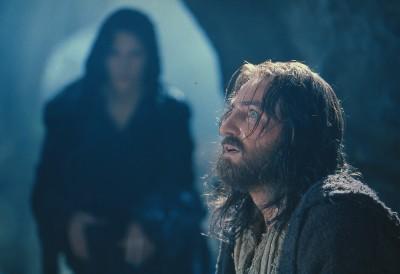
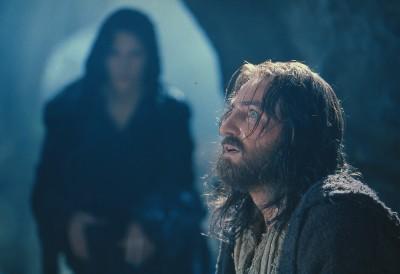
GardenIn the Garden of Gethsemane, Satan did what he could to try to discourage and prevent Jesus from accomplishing His saving mission. [Clip 1: 0:07:55-0:09:12] As Jesus prays for the strength to complete His mission, Gibson depicts Satan unleashing a serpent, which Jesus crushes under His foot. This is an allusion to the story of the first Garden, where Adam and Eve committed the first sin and cut themselves off from God. But even then, God had put in place His plan for redemption, and He promises that the "seed of the woman" (representing all humanity, and, ultimately Jesus, the "Son of Man" and representative of all humanity) will "bruise the head" of the serpent. Jesus is the "new Adam" (1 Cor 15:22), restoring what the first Adam had lost through sin. So Jesus' crushing of the serpent in this scene is used here as a foreshadowing of Christ' victory over the devil and over sin and death through His suffering, death, and resurrection.

Believing in the devil may seem passé to the supposedly "enlightened", but this is a grave mistake. As C. S. Lewis points out in The Screwtape Letters, the widespread disbelief in Satan's existence is actually an ingenious move on the part of the Evil One. If he can convince men that he does not exist--that he is only as "real" as the boogeyman--then we will not be on guard against him. And if we're not on guard against him, we will almost certainly fall into his traps, because the reality is that he desperately wants your soul.

Far from being some abstract personification of "evil," the devil is an actual spiritual being--a fallen angel (or demon). Though this idea sounds quaint or old-fashioned to modern ears, the Catholic Church has consistently taught that the devil is a real being with formidable will and intellect. Being a pure spirit, he is not subject to the laws of the physical world. His natural intellectual abilities far surpass those of human beings. Both the Bible and the Tradition of the Church teach that the devil (also called Satan--meaning "adversary", or
"Lucifer"--"Light bearer") was the most glorious of the angels, but pride and envy caused him and his followers to rebel against God. As a result of this rebellion, Satan and the other fallen angels (or demons) were cast out from God's presence, a separation that will exist for all eternity.

Given the devil's rejection of God, we can reason that he is consumed with hatred towards God and those made in God's image and likeness--humans. Satan, therefore, is surely relentless in his desire to have you and me lose our souls and be separated eternally from the God who loves us. In the movie, and particularly in the scene in the Garden, his aim is to derail Christ's mission on earth--a mission of love, truth, and salvation.

Jesus refers to the devil many times in Scripture. For example, in Matthew 25:41, He condemns those who refuse to follow His will and love their neighbour with the words, "Depart from Me, you cursed, into the eternal fire prepared for the devil and his angels." In these words, Jesus joins the fate of those who refuse to do His will with that of the devil--namely, hell. The apostle John makes the essential mission of Jesus clear in his first letter: "The reason the Son of God appeared was to destroy the works of the devil" (1 John 3:8).

[Clip 2: 0:54:25-0:54:55] In the movie, the devil is present at Jesus' scourging. We see Satan holding a grotesque demon baby in his arms and swirling around the action of this sequence, inciting the torturers to maximum violence and brutality. This was the devil's moment, in which he thought he was winning the battle with God. [Clip 3: 1:01:00-1:02:00] He is depicted with the baby demon as a sort of "anti-Madonna-with-Child" image. The devil wants to corrupt anything that is good and beautiful. The devil taunts Jesus, while His Mother stands by helpless, and His Father appears to have abandoned Him. However, despite appearances, none of these things are true, for we know that it was precisely in Jesus' suffering, death, and resurrection that He won the battle.

Even Mary's apparent helplessness accomplishes much in the Divine Plan. Catholics recognise Mary's obedience to God as the antithesis of the devil's rebellion against God. This is a shock to many people, who think that the devil is the opposite of God. But nothing is the opposite of God, for God has no equals. Nor, apart from God, could Mary be the devil's opponent since the devil, as an angel, is vastly more powerful than any human being, naturally speaking. But Mary is "full of grace" as Gabriel called her. She is full of the life of God and is therefore able to confront the devil [Clip 4: 1:14:15-1:14:45], not only during Christ's Passion, but for our sake as well, now that she is glorified in heaven. Mary's "yes" to God stands in direct opposition to Lucifer's rejection of God's will. We'll discuss this in greater detail in the final week of the series.

Satan's Power
As we said, the devil is powerful, but unlike God, he is not all-powerful. There are definite limits to what he can do. For example, he can tempt us to sin, but he cannot cause us to sin. "The devil made me do it!" is not a valid excuse for our sins. There are times, however, when the devil can "possess" a person and have a certain degree of control in their lives. This notion, made popular in horror movies like The Exorcist, is often blown out of proportion. In order for the devil to possess someone, that person needs to invite him in willingly. However, as the Father of Lies, he might use the bare minimum excuse as an invite. This is a major reason that the Church warns so vehemently against things that are from the occult, like Ouija Boards, or Tarot Cards. But even in a case of possession, God is still more powerful, and repeatedly in the Gospels we hear of Jesus driving demons out of people. What's more, He promised that we would have that same authority as His followers.

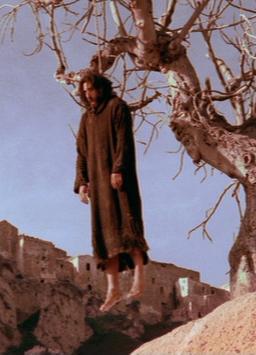
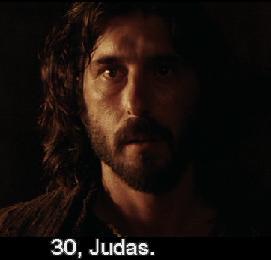
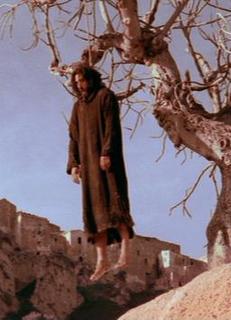
The extreme case of possession aside, the primary way that the devil attacks us is through tempting us to sin, and leading us away from God. The greatest example of such a person is Judas Iscariot, the guy who betrayed Jesus [Clip 5: 0:10:25-0:10:51]. Scripture actually tells us very little about him besides his name and his role as the apostles' treasurer. After betraying Jesus, he was seized with remorse and committed suicide by hanging himself.

Judas
Judas
"Iscariot" means "dagger," which is an interesting name in light of his role in betraying Jesus--"stabbing Him in the back," so to speak. It is also believed that his family was from the town of Kerioth in the south of Judea.

From the parts of the Bible that do talk about Judas, we can find out a little bit more about who he was. He seemed to be very concerned about "earthly" things, such as power and money. He rebuked Mary of Bethany when she anointed Jesus' feet with expensive perfume. Judas griped that that money should have been used for the poor. But St. John tells us that Judas' concern wasn't really for the poor, but that he looked after the money, and used to steal some of the contributions from the money bag (John 12:6).

Besides being motivated by money, Judas seems to have expected Jesus to be a different kind of Messiah, a worldly one who would free Israel from the bondage of its Roman oppressors. Having witnessed Jesus' miracles, it is possible that Judas believed in Jesus' divinity, or at least grasped that He was a prophet. It is sometimes thought that Judas turned Jesus over to the authorities to force His hand--to cause Jesus to exercise His authority and restore the Jewish nation to earthly glory.

[Clip 6: 0:31:45-0:32:35] Judas seems to have felt remorse for his betrayal of Jesus, because, as we see in the film, he throws the 30 pieces of silver he was paid to betray Jesus on the floor of the Temple (see Matt 27:5). He even says to the priests and scribes with whom he collaborated, "I have sinned in betraying innocent blood" (Matt 27:4). This shows that Judas wasn't totally without conscience. Even so, this remorse was not followed by the virtue of hope--a hope that he could be forgiven [Clip 7: 0:15:30-0:16:11].
Judas2
The Bible reveals that after he cast the 30 pieces of silver on the Temple floor he went out and hung himself (Matt 27:5). Mel Gibson portrays him as being in the throes of demonic torments that plague him and drive him farther from God.

[Clip 8: 0:32:35-0:33:48; Clip 9: 0:35:40-0:37:50]. He could have become a great saint had he recovered from his sin as Peter did. Instead, he despaired of God's mercy and chose death.


"Good Thief" vs. "Bad Thief"
Three Crosses
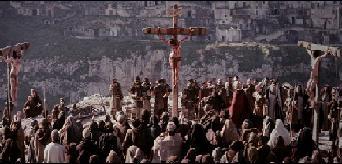
There are two more people to consider when it comes to the topic of sin. The two people who were crucified with Jesus illustrate both the effects of sin, and also the possibility of forgiveness and reconciliation. The "Bad Thief", whom Tradition has named Gesmas, lets his sinful life make him bitter. His sin has taken so much control of him, that he is blinded to the truth that is Jesus. He mocks Christ just as much as anyone else. Unfortunately, Gesmas' fate is all too common. Sin takes us down a road that gets farther and farther from God. While it is true that He can forgive any sin as long as we're willing to let Him, the very act of sinning, and living a sinful lifestyle, hardens our heart to His love and forgiveness. In contrast, the "Good Thief," Dismas, realises the truth, and even though he was a terrible criminal himself, his heart is still soft towards the things of God, and that is all God needs to bestow His love and forgiveness. Jesus' love and forgiveness of His torturers and murderers touches the thief's heart, and he humbly asks Christ to forgive him [Clip 10: 1:44:20-1:44:50; Clip 11: 1:45:00-1:46:15]. The "Bad Thief" scorns this humble act as a futile gesture of a desperate fool, and subsequently has his eyes gouged out by a crow, an event in the movie which echoes historical facts (carnivorous birds would often peck at crucified victims' eyes to make sure they were dead before trying to eat them) but also symbolically demonstrates his spiritual blindness.

The fate of the "bad thief" is contrasts with that of the "good thief," who in the Bible professes belief in Christ at the eleventh hour and is assured by Jesus a share in His Kingdom. The forgiveness of Dismas by Jesus gives all Christians hope in the saving power of faith. Even at the hour of death it is possible to ask for and receive forgiveness of one's sins by trusting in Jesus!

The forgiveness that Jesus won on the cross, as we discussed in detail last week, is available to everyone. That is why Jesus cried out when He was being crucified, "Father, forgive them!" [Clip 12: 1:38:00-1:38:20] Jesus' desire to forgive us and wipe out sin extends even to the very people responsible for His death! And we know we can be forgiven, because the Devil was defeated on the cross [Clip 13: 1:55:10-1:55:25]! The Bible says, "Even when you were dead in transgressions, He brought you life along with Him, having forgiven us all our transgressions; obliterating the bond against us, with its legal claims, which was opposed to us, he also removed it from our midst, nailing it to the cross; despoiling the principalities and the powers, He made a public spectacle of them, leading them away in triumph by it" (Colossians 2:13-15).

How Do We Gain Forgiveness?
During the discussion yesterday, the question was asked how we know we are forgiven. In my last blog, we discussed baptism as the means that God provided for us to enter into His Covenant--His family--and to have our sins washed away. That's the first step any of us takes, and many of us take it as babies (not me, though. I was 16).

But what about the inevitable times afterwards that we will be tempted and buy into it? How are we forgiven then? The Bible tells us that if we confess our sins, God is faithful and just to forgive us (1 John 1:9). In most circumstances, we can just apologise to God with a sincere heart. These are the cases of venial sin, as we mentioned up above. We have means to go straight to God because our sins are of such a nature that, while they harm our relationship with God, they do not sever it completely. This is because a venial sin isn't done with the desire to sin, to flip God off, as it were, but was done in the heat of some passion and not with our full, reasoned consent. However, continuing to surrender to our passions in venial sin will continue to damage the relationship to such a point that it becomes mortal, or deadly, to our relationship with God.

Mortal sin is the kind of sin we do that is fully a result of our reasoned choice and understanding. We know it is wrong, and we still very much want to do it, consequences be damned--or rather, the consequences would be damnation. This sort of sin severs our relationship completely with God, in such a way that if it is never dealt with, we are in effect no longer Christian. As such, our forgiveness requires a more drastic approach in order for us to reenter the community. That is why Jesus provided us with the Sacrament of Reconciliation (or Confession or Penance). It is in this sacrament that we have the means to restore ourselves to the Covenant which we violated by our sin.

Jesus instituted this sacrament after His Resurrection, when He told His 12 Apostles, "'Peace be with you. As the Father has sent Me, so I send you.' And when He had said this, He breathed on them and said to them, 'Receive the Holy Spirit. Whose sins you forgive are forgiven them, and whose sins you retain are retained'" (John 20:21-23). St. James wrote in a letter about this sacrament and one other, the Anointing of the Sick. Regarding Confession, he writes, "He should summon the presbyters [of which "priest" is an English contraction] and they should pray over him....If he has committed any sins, he will be forgiven. Therefore, confess your sins to one another and pray for one another, that you may be healed" (James 5:14-16). James ties the two sacraments together in his letter, but Sacred Tradition separates the two into distinct, but often overlapping, sacraments.

In the sacrament of Reconciliation, we can know we are forgiven because we know by faith that this is the means that Jesus set up for us. Therefore, when we hear the words of absolution by the priest, they can minister to our heart in a way that might not have been the case up to that point. It's one thing to know something with our heads (God loves us and forgives us) or to read it in a book, even the Bible. But in sin, the devil (that jerk) tries to keep us from believing that forgiveness is possible, just like he drove Judas to despair and suicide. So when we, in the throes of guilt, try to reach God on our own, heaven can feel very far away. The beauty, then, of confessing our sins to a priest, gives us the opportunity to hear the words as though from Christ Himself, as the priest stands in His stead.

Furthermore, if you have a good priest, he can help you to find the root of your sin, so that you can more ably dig it out. Thus, Confession can be a mini counselling session. The third thing that Confession does is give us the first step in Repentance, which is turning 180 degrees from sin and going back to God. The Penance that the priest assigns is designed to counter the sinful act and show us the first step back to living the holy life. But by far the most important thing that the Sacrament of Reconciliation does is to humble us. It's a very easy thing to keep our sin between us and God. No one else has to know. But in Confession, we must openly admit our sins to a priest, and this is very difficult. But it is important, because the very act of Confession attacks the deadliest of the Seven deadly sins--the very sin that caused Satan's downfall--Pride.

Through the Cross, Jesus makes forgiveness available to all. He gave His Church the means of Grace and Forgiveness so that we may be members of His Covenant Family. So then, as members of His Family, where do we go from here? We'll discuss that next week as we look at some of the characters in The Passion of the Christ who had a life-changing encounter with Jesus, and see that our lives should tell a similar story of radical change!

God bless.

Labels: , , , ,