Friday, November 17, 2006

Sts. Perpetua and Felicity - c. 203
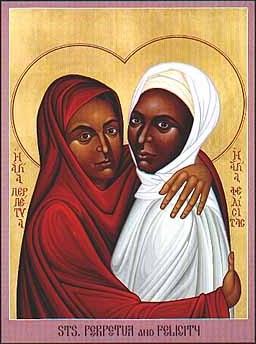
Before her death, St. Perpetua wrote an account of her sufferings, which we still have today. Obviously, someone else stepped up and finished the story after her death, but nevertheless, her autobiographical description is one of the first documents we have written by a woman--making St. Perpetua one of the first female writers! Her story was so popular, in fact, that St. Augustine had to warn his parishioners against giving it the weight of Scripture!

St. Perpetua was born around AD 181, in Carthage, a city of North Africa. She was the daughter of a wealthy Roman nobleman, and was married to a soldier. At that time in the Roman Empire, slavery was still a common and acceptable practice, and being a rich noblewoman, Perpetua had slaves. One of them was Felicity. But because they were of similar ages, and had both recently been married, and since Perpetua had just given birth, and Felicity was pregnant, the similar events in their lives led them to develop a friendship that went beyond slave-master.

At this time, in the Roman Empire, the Emperor, Caesar Septimus Severus had proclaimed that Christianity was illegal, and that it was therefore illegal to convert to Christianity, or to proclaim and teach the Christian faith to non-Christians. Those who were already Christians, or born into Christian families, were excluded from the government's censure, unless they tried to convert others--but for those who converted, the penalty was often death. Despite this, the Christians continued to spread the Gospel, convinced of its truth and importance. That was how St. Felicity's husband came to hear about Jesus, and he began learning about the Christian faith from a priest, Father Saturus. Felicity's husband, Revocatus, convinced Felicity to come and learn as well, and she in turn persuaded Perpetua.

These three, with two others (Saturninus and Secundulus), attended catechism in secret from Father Saturus. However, before they could complete their instruction, and be baptised the following Easter, the Roman government found out about their religious instruction, and had the five catechumens, as well as their priest, arrested. The date for their trial would not come right away, though, and they languished in their dungeon for months--awaiting a suitable occasion: the birthday of the Emperor!

During their time in prison, Fr. Saturus would continue to teach them the Christian faith, and, when they were catechised enough, he took some of their drinking water, and baptised each of them, since it would be impossible for them to wait for the following Easter. During this time, Perpetua's father, who was a nobleman and thus had influence, was permitted to visit Perpetua. But far from bringing joy and relief to her, she writes that his visits only served to vex her further, since he, as a Pagan Roman, continually tried to convince Perpetua to abandon the Christian faith to save her life. He appealed to her reason, to her honour and to her family's honour--to not die so shameful a death. But most of all, he appealed to her mother's heart, for who would take care of her newborn baby? Perpetua knew that her son would be starving without her to feed him, since he hadn't been weaned yet. But on one of her father's visits, he brought her mother and also her brothers, one of whom himself was also secretly learning the Christian faith (though, obviously, he hadn't been caught yet), and he went to the Deacons of the Church in Carthage, who bribed the guards to let Perpetua's baby be brought to her. And so she was able to feed her son until her trial.

Furthermore, Perpetua's brother also asked her to pray to God, that maybe she'd be granted a vision that would indicate whether her current sufferings and imprisonment would lead to martyrdom. She agreed, and in fact did receive a vision. Here's her account:
I beheld a ladder of bronze, marvelously great, reaching up to heaven; and it was narrow, so that not more than one might go up at one time. And in the sides of the ladder were planted all manner of things of iron. There were swords there, spears, hooks, and knives; so that if any that went up took not good heed or looked not upward, he would be torn and his flesh cling to the iron. And there was right at the ladder's foot a serpent lying, marvelously great, which lay in wait for those that would go up, and frightened them that they might not go up. Now Saturus went up first (who afterwards had of his own free will given up himself for our -sakes, because it was he who had edified us; and when we were taken he had not been there). And he came to the ladder's head; and he turned and said: Perpetua, I await you; but see that serpent bite you not. And I said: it shall not hurt me, in the name of Jesus Christ. And from beneath the ladder, as though it feared me, it softly put forth its head; and as though I trod on the first step I trod on its head. And I went up, and I saw a very great space of garden, and in the midst a man sitting, white-headed, in shepherd's clothing, tall milking his sheep; and standing around in white were many thousands. And he raised his head and beheld me and said to me: Welcome, child. And he cried to me, and from the curd he had from the milk he gave me as it were a morsel; and I took it with joined hands and ate it up; and all that stood around said, Amen. And at the sound of that word I awoke, yet eating I know not what of sweet.

And at once I told my brother, and we knew it should be a passion; and we began to have no hope any longer in this world.
(Meaning, of course, that they placed all their hope in Heaven, not that they gave in to despair.)

The six Christians continued to pray with each other and encourage each other as the day approached, but St. Felicity grew more and more worried. You see, she was still pregnant, and was not due to give birth until after the date slated for execution. According to Roman law, a pregnant woman could not be tortured or executed until after she had given birth. St. Felicity was worried not so much about being tortured or executed for Christ's sake, but that she would not be able to be martyred along with her friends. It's often hard to do the right thing. That's especially the case when it comes to giving your life. But it's even harder when you have to do it alone. Felicity was worried that when her time came, without her friends' encouragement she would not find the strength within her to confess Christ.

The six prayed together about this, and although Felicity was only about eight months pregnant, a week before their trial, she gave birth to a healthy baby, who was arranged to be adopted by a Christian family. In this, God showed that He was still with them, and cared for them, even in that dark prison. His asking of them to lay down their lives was not a sign that God had abandoned these six brave Christians, but rather, that He had singled them out for greater honour!

The day before their martyrdom, the six were allowed to have whatever they desired as a "last meal". Unanimously, they chose to have bread and wine, which Fr. Saturus blessed, and so they celebrated the Mass together. When the day finally came for these six great saints to be martyred, they were led to the arena in Carthage, to be tried by the magistrate. Each in their turn were asked whether they would renounce Christ and sacrifice a goat to Caesar and worship him, and each in their turn refused, claimed to be Christian, and were sentenced to be thrown to the wild beasts.

When it came time for Perpetua to be tried, however, not only the magistrate, but also her own father, attempted to convince her to abandon the Church. Her father came forward, carrying her baby in his arms, and appealed again to Perpetua to recant and live, so that her baby wouldn't die of starvation, for lack of milk. But again, through God's grace, He made it so that the baby was already weaned before his time, and no longer needed his mother to live. Thus, Perpetua, with her friends, professed herself a Christian, and was sentenced to death.

While the men were sentenced to face off against leopards and bears, out of spite and mockery for their femininity, the court sentenced Perpetua and Felicity to be attacked by a cow (a symbol of motherhood, and a mockery of these two mothers). When the two courageous women were thrown into the arena, Perpetua's robe tore, and she took the time to tie it so that she would appear modest and decent, taking more care for her modesty than for her own wounds. She even tied back her hair, since messy, unkempt hair was a sign of mourning in her culture, and she didn't want anyone to think that she was sad at her fate, but courageous and confident in God. She turned to help up Felicity, and immediately was led off to the side of the arena to rejoin the men who had survived the beasts. When there, she asked them, "When are we going to face the cow?" Amazed, her friends said to her, "You already have! It's hurt you! Look at yourself!" Perpetua and Felicity had been blessed by God to have had an ecstatic encounter with him, so that they were spared the pain of the cow's attack. In fact, Perpetua had to be shown her own wounds before she would believe her friends!

Afterward, all of them were led out again, and sentenced to be killed by the sword. The courage of these martyrs, particularly of the women, touched the audience so much, that many of them became Christians, including the jailer of the martyrs. It was one of these converts who finished the account of Perpetua's and Felicity's martyrdom, so that others in future generations would hear about and be inspired by their courage and sacrifice. In the author's own words:
O most valiant and blessed martyrs! O truly called and elected unto the glory of Our Lord Jesus Christ! Which glory he that magnifies, honors and adores, ought to read these witnesses likewise, as being no less than the old, unto the Church's edification; that these new wonders also may testify that one and the same Holy Spirit works ever until now, and with Him God the Father Almighty, and His Son Jesus Christ Our Lord, to Whom is glory and power unending for ever and ever. Amen.
God bless.

Labels: , , , , , ,

Tuesday, November 07, 2006

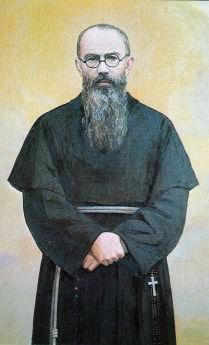
St. Maximilian Kolbe - 1941

Since Remembrance Day is coming up, I figured it would be good to relate the story of a Saint who played a large role in World War II.

Raymond Kolbe was born in 1894, in Zdunska Wola, Poland. Throughout his childhood, Raymond was quite a troublemaker. Very mischevious, he was always trying to get away with something, and his parents often considered him to be quite a trial. However, in 1906, around the time of his First Communion, things changed for Raymond. One night, he had a vision, and in that vision, he saw the Blessed Virgin Mary, and he asked her what was to become of his life. In response, she held out two crowns: one white, and the other red. The white one, she said, represented a life of purity, and the red one, a death of martyrdom. She told him he could choose a crown. Raymond decided to choose both.

Raymond chose to enter the priesthood with the Fransiscans, and took the name Maximilian. While in seminary, he and some friends started a club known as The Crusaders of Mary Immaculate, who were dedicated to spreading the Gospel of Jesus, the conversion of sinners, devotion to Mary, and to the Miraculous Medal.

After his ordination, St. Maximilian founded a Fransiscan monastery in Warsaw, Poland, in order to further spread faith in Christ and devotion to the Miraculous Medal, known as "The City of the Immaculate". After a while, though, he became restless, and felt God wanted him to travel as a missionary. So in 1930, Maximilian Kolbe went to Nagasaki, Japan, and there founded another monastery. After that, he continued on to India, doing the same thing, but illness caused him to have to return to Poland in 1936.

(Incidentally, Nagasaki was one of the two cities, with Hiroshima, that the USA dropped nuclear bombs on at the end of World War II, in retaliation for the Japanese attack of Pearl Harbour. The atomic bombs decimated nearly everything in those two cities--but, miraculously, St. Maximilian's monastery, and all those within, survived the bombing. Just one of the miracles attributed to devotion to the Miraculous Medal.)

Back in Poland, Maximilian continued his priestly duties, and overseeing the monastery there. On top of this, he began to publish and write for a newsletter called "The Knight". In it, he would teach about the love of Christ, and also address issues of justice and right living. When Adolph Hitler came to power in Germany in 1939, and began his Holocaust of the Jews and others who weren't of the Aryan race, many refugees began to flee from Germany to escape the oppression and persecution. Many of these refugees came to Poland, and Maximilian was able to put his teachings on love and justice into action, by hiding refugees in his monastery, and caring for them there. At one point, he had about 3000 refugees hidden in the monastery, and at least two-thirds of them were Jewish, because he knew that God loves all people, not just those of a certain ethnicity or religion.

For this act of hiding refugees, and for continuing publication of The Knight, which the Nazi Party considered to be Anti-Nazi, when Germany invaded Poland at the beginning of the War, Maximilian Kolbe was arrested and put into the Polish prison of Pawiak, on February 17, 1941. On May 28th, he was transferred to the Auschwitz concentration camp, in Germany, and even then was put in the worst sector--with particularly cruel guards--because he was a priest. There he was often beaten and deprived of food. Through it all, though, he continued to tell others about Christ, and to hear Confessions. He even, when he could get his hands on some smuggled in bread and wine, would say Mass and give other inmates the Eucharist!

After about a month and a half, there was an escape from Auschwitz. Protocol dictated that for every escaped prisoner, ten others were to be executed in his place. So the Nazis rounded up several people. One of them was a Jewish man named Franciszek Gajowniczek. He cried out, "Please! I have a wife and four children! Please don't kill me!" The guards were pitiless to his cries, but St. Maximilian Kolbe stepped forward and said, "This man has a wife and family. I am a priest. I have no wife, no children. Kill me instead and let this man go free."

In making this sacrifice, Maximilian lived out the two crowns that Our Lady had offered him: the purity of the priesthood, and the martyrdom of charity. He died on August 14th, 1941. Franciszek Gajowniczek did survive Auschwitz, and because of Maximilian's sacrifice, he and his family converted to Catholicism!
No one in the world can change Truth. What we can do and should do is to seek truth and to serve it when we have found it. The real conflict is the inner conflict. Beyond armies of occupation and the hecatombs of extermination camps, there are two irreconcilable enemies in the depth of every soul: good and evil, sin and love. And what use are the victories on the battlefield if we ourselves are defeated in our innermost personal selves?

Saint Maximilian Kolbe in the last issue of The Knight

Labels: , , , , , , , ,

Friday, November 03, 2006

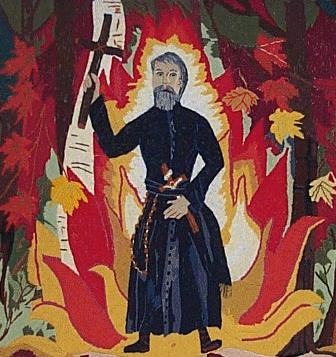
St. Jean de Brébeuf - 1649

St. Jean de Brébeuf is probably my favourite of the martyrs. In fact, I was going to choose him as my Patron Saint at my Confirmation, but, because I was converting from Protestantism, and my parents are still protestants, and because the name they gave me means so much to us, I thought they might not understand when the priest said "Jean, be sealed with the Holy Spirit." Because of that, I chose to take Sts. Gregory of Nyssa and Gregory of Nazianzus as my patrons.

St. Jean de Brébeuf still has a special place in my heart, though, and that's for three reasons. 1st, he's known as a Canadian saint, and one of the Patrons of our great Country. 2nd, he was a missionary, one who spreads the Christian faith--which is something that I feel called to do. And 3rd, he was a martyr--and, in my mind, the martyrs just rock out loud. Hence my writing about them here!

St. Jean de Brébeuf was born in Normandy, France, in 1593. From an early age, he knew that he wanted to be a part of spreading the Gospel, so, when he was old enough, he went to the Jesuits in order to become a lay missioner. However, he strongly felt that God was telling him that being a layperson wasn't the plan--God wanted him to become a priest. So, he thought, he would study theology and the Bible and the history of the Church, and become one of the smartest priests around, so that he could train others to do missionary work. So he enrolled in the Jesuit University in France, and began studying.

Well, this lasted all of maybe a month, and then Jean became really sick. He was so sick that he had to return home in order to get better. His sickness stayed with him for nearly nine years! But, during this time, Jean realised that God was calling him to more than simply instructing others. God wanted him to actually go out and do the mission work himself! And so, when he was well enough, Jean de Brébeuf signed up to be a part of the team that was going to the newly discovered country of Canada!

Now, in my mind, it is definitely an act of God, when someone who is too sick to even study, is suddenly well enough to accept the call to travel across the ocean, to Canada, and face our harsh winters and other rough climates! Nevertheless, St. Jean de Brébeuf went, and thrived there!

At this time, in the early 1620s, the Protestant revolt had been going on for about 100 years. Tensions were high, and oftentimes violent, as whole European countries would often side with either Protestantism or Catholicism. England, on the one hand, for example, had become totally Protestant, and even outlawed Catholicism. France, on the other hand, became rather totally Catholic, and outlawed Protestantism. This fact merely fuelled the rivalry between the two countries that had existed for centuries, since the French Normans had invaded England back in 1066.

Well, it just so happened that it was an English Protestant captaining the ship that was carrying St. Jean de Brébeuf and the other Jesuits to Canada, who more than once threatened to "turn this boat around and take you back to France!" because they were Jesuit missionaries, and the English and the French were fighting over who got Canada.

Well, despite the threats, St. Jean de Brébeuf and the others arrived safely in Canada, and travelled to Trois-Rivières, Québec, where the Jesuits were headquartered. When he arrived, Jean did not simply begin proclaiming the Gospel, because he would not have been understood! The Natives only spoke a very little English or French, if any, and he didn't speak their language at all--nor did he understand their customs or culture. So the first thing that he did was begin to study the customs of the Native people, so that he could better understand and communicate with them.

After some time of this, he was assigned to travel with a tribe of natives known as the Hurons back to their land in Upper Canada (modern day Ontario, basically in the Simcoe area). It was a three-day canoe ride with the Hurons, and because St. Jean de Brébeuf was so large of a man, the Hurons even hesitated to let him in the canoe with them, for fear it would sink! As it was, he had to travel alone with a group of Hurons, while the other Jesuits were each in separate canoes. Since he still couldn't communicate with the Hurons, it was a three-day trip in silence, with only God to talk to.

Finally, they arrived in the Hurons' home, and the Jesuits worked to set up their Mission, and to continue to build relationships with the Hurons, learning their language and ways. Jean de Brébeuf found this task particularly difficult, but he continued to strive at learning Huron. After years of it, he managed, and even wrote a Huron Catechism, and a Huron-French dictionary to aid his fellow Jesuits in their learning and communication. Through these means, and their cheerful and friendly attitudes with the Natives, friendships were finally forged, although the Hurons were still not open to receiving the Gospel.

Back in Québec, however, things were not going so well at all. Tensions between the English and the French were heating up, and growing to the point of war. The Jesuit Superior at Trois-Rivières instructed the missionaries in Huronia to return. This order broke Jean de Brébeuf's heart, because he had grown to really love his Huron people. The Hurons also felt hurt, and abandoned, because they did not understand about Superiors and Orders. But Jean had to go. Back at Trois-Rivières, the situation was even worse than he'd feared, and the Jesuits had to return all the way to France.

Back in France, Jean tried to do whatever service he could with the Jesuits, but more than anything he wanted to return to Canada, to his beloved Hurons. Finally, God answered the prayers of his heart, and after a 4-year exile in France, he was able to return. But when he was back with the Hurons, Jean found that he had to rebuild those friendships that he had forged. Trust had been lost between them, and he had to work harder than ever to reach them with the Gospel.

Complicating matters was the fact that the Natives often got deathly ill with the white men's diseases, since their immune systems had never encountered them before. To the Hurons, it seemed as though the white men were cursing them with death. Jean de Brébeuf would minister to the sick and dying Hurons, telling them about Christ and Heaven. Those who converted, he would baptise--but they were so sick that they would often die the next day. This caused the Hurons to be rather afraid of Baptism, thinking that it was the cause of death for their friends and family--and so, it became still harder for St. Jean de Brébeuf to make converts!

Patiently, however, Jean de Brébeuf continued his work, and sought the intercession of Mary, and of St. Joseph, whom they had long ago established as the Patron Saint of Canada. After nearly four years, the earnest prayers of the missionaries were answered, when two healthy adult Huron men, Pierre Tsiouendaentaha and Joseph Chiwatenha converted and were baptised. Because of their example, Christianity began to make a slow but steady headway. St. Jean de Brébeuf continued his work among the Hurons for nearly 16 years, and conversions among the Hurons grew until they could be numbered in the thousands!

However, not all was peaceful in the land of Huronia. The Hurons had enemies in the deadly savage tribe of the Iroquois, and these enemies would often savagely attack the Hurons, who frequently kept poor guard. In 1648, Huronia began to fall to the well-armed Iroquois, who were intent on destroying their enemies. The Iroquois kept destroying Huron villages, causing them to flee. Finally, on March 16, 1649, the Iroquois attacked the village of St. Ignace, causing the Hurons to flee to St. Louis. The Iroquois took that as well, and, killing many Hurons, they captured several, as well as St. Jean de Brébeuf and his colleague, St. Gabriel Lalemant, who were taken back to St. Ignace.

The two missionaries were fastened to great stakes, and tortured in various ways, such as placing necklaces of red-hot tomahawk heads around their necks, and pouring boiling hot water on their heads in mockery of baptism. Through it all, St. Jean de Brébeuf never complained, but endured it stoically. His friend, Paul Ragueneau, wrote, "No doubt, his heart was then reposing in his God." This went on for several hours, and his silence astonished and angered his captors. Finally, when Jean de Brébeuf did begin to speak, it was to preach the Gospel of Christ to them, and to encourage the Hurons with him to continue to cling to God, and await the reward of Heaven. They replied, saying, "We will call on God as long as we live. Please, pray for us!" Finally, the Iroquois killed the saint at about 4 pm on March 16, 1949.

Since the Iroquois had all but exterminated the Hurons, and those who had survived had fled into the USA and could not be found, the remaining Jesuits retreated to Trois-Rivières to determine what they should do. Should they go back to France, in defeat, or should they return to the Iroquois to face what seemed like certain death? They decided that they were called to be missionaries here, and, following in the spirit of Jean de Brébeuf, they returned to the Iroquois. Because of the example and courage of St. Jean de Brébeuf, and the love and courage of the Jesuits who returned, the Iroquois people were deeply moved, and many became Catholic!

Again, we see that the death of the martyr is never the end of the story--but their sacrifice is used by God to bring incredible change! Because of the work of these early Canadian missionaries, our Country was started as the Christian nation that it was. Let us seek the intercession of St. Jean de Brébeuf and the Holy Canadian Martyrs that Canada would continue to be a nation that upholds Godly values!

St. Jean de Brébeuf, pray for us!
Amen.

Labels: , , , ,

Wednesday, November 01, 2006

St. Maria Goretti - 1902

St. Maria Goretti is unique among the saints and martyrs of the Catholic Church, as the youngest saint ever to be canonised! At the time of her martyrdom, she was only eleven and a half years old.

Maria Goretti was born on October 16, 1890, to a very large, but poor, Italian family. Her family was so poor, in fact, that in order to make ends meet, her father, Luigi Goretti, had to make arrangements with another family, the Serenellis, to come and live on their farm, and do the farmwork with them, in order to make ends meet--to have enough food and a place to live!

As Maria grew up, she made a decision to live as God would want her to--to be good, and humble, and modest. She would take care of her younger siblings, and do thankless chores around the farm, even when no one asked. Around town, she was well-known for her good behaviour and her modesty. When, two years after they'd moved to the Serenelli farm, her father died of Malaria, St. Maria Goretti had to mature even more, and continued to serve her family and take care of her brothers and sisters.

When she was growing up, Catholic children received the Sacraments of Confirmation and Holy Communion in a different order than we do today. Maria would have been Confirmed around the age of six or seven, and would not receive the Eucharist until she was eleven. As her opportunity for First Communion approached, Maria took extra care to prepare herself to receive such an awesome gift: Jesus Christ, fully present, Body, Blood, Soul, and Divinity, in the Eucharistic bread and wine! She spent much time in prayer and spiritual reading, in order to make sure she was worthy of receiving such a precious gift! When the day came, her family said that it was the greatest moment, and highlight of her life!

But if St. Maria Goretti could be considered a model of saintly virtue, of love, compassion, and modesty, then another person on that farm was the exact opposite. The Serenelli family had a son, Alessandro. And Alessandro was not a good kid. In his teens, he got into the wrong crowd, and going with them to parties and other things, he lived a very wayward life. Alessandro was often violent, and got in trouble with the law on more than one occasion. On top of all this, he would occupy his free time reading and looking at very impure things, like pornography. All of these choices that Alessandro made, caused him to have a very skewed and troubled, and selfish, outlook on life. And when he looked at Maria as she grew up, he felt lust in his heart.

Alessandro would many times try to come on to Maria, trying to seduce her; but Maria, very conscious of God's instructions on the topic of sex, and very protective of her modesty and purity, would tell Alessandro, No, and remind him that God did not permit that kind of behaviour. But Alessandro wasn't interested in what God wanted, but only what he wanted. Over and over, he would try to tempt Maria, and over and over she would turn him down, reminding him of God's Laws. Finally, Alessandro wasn't going to take no for an answer any more, and on July 5th, 1902, he tried to force himself on Maria, in order to rape her. When she again struggled to resist him, telling him again that "This is a sin! God doesn't want this! You can go to hell for this, Alessandro!" he took a knife, and stabbed Maria with it fourteen times. Maria was quickly taken to the hospital, and Alessandro was taken to prison.

As Maria lay in the hospital overnight from July 5th to 6th, 1902, she held a medal of Our Lady, and a Crucifix. Over and over, she prayed for Alessandro, that God would have mercy on him! She kept praying for Alessandro's forgiveness until she died, and, truly, even afterward in Heaven.

Meanwhile, Alessandro, who was a minor when he committed his attack, was sentenced to 30 years in prison. While there, nothing changed, and he continued to be a selfish, violent prisoner. Often he would attack the guards, as well as other inmates. He would even attack the faithful priest who would come to visit him, in order to encourage him to repent and turn to God. This behaviour continued for thirteen years.

But one night, Alessandro had a vision. In that vision, he saw Maria Goretti in a field full of lilies--a flower that has traditionally symbolised purity. Maria was gathering up the lilies into a bouquet, and then walked up to Alessandro. She told him to take the lilies, and when he did, he said they turned into a still white flame that went into his heart. Alessandro awoke from that vision as a changed person.

The next day, when the priest came to see him--probably expecting to be beaten up--he found a calm and quiet Alessandro Serenelli. That day, Alessandro made a good Confession, and turned his life over to Jesus Christ. After he served out the rest of his sentence, Alessandro went to Maria's mother, and asked her forgiveness for his crime. Mrs. Goretti forgave Alessandro, and that year they attended Christmas Eve mass together. Alessandro afterwards became a Capuchin monk, and lived a life of purity, helping others to turn from their sinful lifestyles.

When the cause of Maria's beatification came up, Alessandro Serenelli testified to her life and purity, and told of his crimes against her. When in 1952, Pope Pius XII canonised her as a saint, her mother was there to witness it! On that occasion, the Pope said these words:
With splendid courage she surrendered herself to God and his grace and so gave her life to protect her virginity.

The life of a simple girl - I shall concern myself only with highlights - we can see as worthy of heaven. Even today people can look upon it with admiration and respect. Parents can learn from her story how to raise their God-given children in virtue, courage, and holiness; they can learn to train them in the Catholic faith so that, when put to the test, God's grace will support them and they will come through undefeated, unscathed, and untarnished.

From Maria's story carefree children and young people with their zest for life can learn not to be led astray by attractive pleasures which are not only ephemeral and empty but also sinful. Instead they can fix their sights on achieving Christian moral perfection, however difficult that course may prove. With determination and God's help all of us can attain that goal by persistent effort and prayer.

Not all of us are expected to die a martyr's death, but we are all called to the pursuit of Christian virtue.

So let us all, with God's grace, strive to reach the goal that the example of the virgin martyr, Saint Maria Goretti, sets before us. Through her prayers to the Redeemer may all of us, each in his own way, joyfully try to follow the inspiring example of Maria Goretti who now enjoys eternal happiness in heaven.
St. Maria Goretti again reminds us that the story of a martyr goes beyond their tragic death--but always impacts the lives around them, even their killers, as we see from the radical change Maria's example of purity, her willingness to die, and her prayers from heaven had on Alessandro Serenelli.

God bless.

Labels: , , , , , , , ,

Saturday, October 14, 2006

St. Peter - c. 64

For this post, we're jumping way back to the beginnings of Christianity again, to discuss the big kahuna himself, St. Peter, the leader of the Church and first Pope.

Now, Peter wasn't born with that name. Instead, his parents named him Simon. And Simon was a fisherman, who made his living catching and selling fish in his hometown of Capernaum. But I suspect he wasn't all that great of a fisherman, since at least twice, the Gospels tell us that he spent the whole night fishing, and didn't catch a thing!

After one of these profitless nights, a tired Simon and his colleagues were sailing to the shore of the Sea of Galilee, and on the shore, they see a Man, talking to a crowd of people who are swarming so close to Him that they're almost pushing Him into the water. This Man turns to Simon, and says, "Simon, can I borrow your boat?" Simon lets this Man up so that He can continue to preach and teach about God's love and His Kingdom. Simon listens intently to what this Man has to say, and after He is done His message, Simon makes sure to introduce himself. Jesus says to him, "Hey, let's go fishing!" Simon, tired from the night's work, and knowing that the middle of the day is just a bad fishing time, was probably a little doubtful: "Actually, Jesus, if it's all the same to you, I'd rather go home to bed. I was out all night and didn't catch anything. Do You mind?" To which, Jesus replies, "Come on, it'll be fun!"

So Simon sets out with Jesus for some highly irregular fishing--and it will only become more irregular from this point out! In the middle of the sea, Jesus says to Simon, "Throw out your nets!" Simon again reminds Jesus that fishing is terrible at this time of day, but follows Jesus' instructions anyway. And after catching nothing all night, in peak fishing hours, suddenly now, in the middle of the day, Simon's nets are so full that they're breaking from the catch!

Realising that this just isn't normal, Simon turns to Jesus and says, "Away from me, Lord, for I am a sinful man!" Jesus, instead, lifts Simon up and says, "No longer will you catch fish, but from now on, you will catch men!" And from that point, Simon gave up his fishing business and accompanied Jesus as He taught about the Kingdom of God, and Simon himself preached and did many signs and wonders.

A little while goes by, and Jesus pulls Simon and the other disciples aside for a pop quiz. There had been a lot of questions about who exactly Jesus was, and so He put those questions to His crew: "Who do people say that I am?" Some replied that people thought He was Elijah come back from heaven. Others said He was a great prophet. Some didn't like Him so much, and thought He was a bit of a wing-nut. So Jesus brought it home: "Who do you say that I am?" Simon, who was one of those kids who always answered without sticking up his hand, blurted out, "You are the Christ, the Son of the Living God!" And, much to his surprise, Jesus replied by saying, "Hey, you're right!" Jesus continued, saying, "This answer didn't just come from your own mind, either, but God Himself revealed this to you! Because of this, I'm renaming you Peter, the Rock, and on this Rock I will build My Church!" Peter was on top of the world!

But the very next moment, Jesus said, "But first, people are going to begin to hate Me, and they'll take Me away and crucify Me! But I will rise again on the third day." I guess Peter missed the last part, because he immediately interrupted, saying, "What?! There ain't no way, Lord! That ain't gonna happen!" Jesus got right in Peter's face and said, "Get behind Me, satan. You're not focussing on what God wants, but on what you want!" Now, of course, Jesus wasn't calling Peter the devil, but in calling him satan, which means "adversary" or "opponent", Jesus was showing that Peter's mindset was in direct opposition to the will of God. Peter went from a big high, to a very deflated low. And much of the Gospel's record of Peter was a repeated loop of big high, big low as he served God well, and then followed it up with sometimes incredible stupidity.

Perhaps the most famous case of Peter's stupidity was at the Last Supper. Jesus again told them of His impending Crucifixion, so that His disciples would not need to be confused as well as afraid, but know what the plan was. He told them that when it happened, they would all leave Him and scatter. Peter, again speaking out boldly, said, "Never, Lord! Even if all these others leave You, I never will! I'm willing to even die with You!"

I'm grateful that Jesus is so infinitely patient with us. I'm sure He sighed and shook His head, and then told Peter, "I'm telling you, Peter, this very night you will deny that you know Me three times before the rooster crows." And of course, Peter rejected that! "Nuh uh! No way! No!"

Afterward, they went out to the Garden of Gethsemane to pray. Well, Jesus prayed. Peter, James, and John fell asleep. Three times. Finally, Jesus (again, eternally patient) wakes them to tell them that the mob is here to arrest Him. Peter, again trying to be the heroic Rock, takes out a sword and starts swinging. He chops off one of the guards' ears! Jesus again, shakes His head and says, "Oh Peter, didn't I tell you not to do that? This has to happen!" With that, Jesus heals the ear of the guard! Meanwhile, Peter and the other disciples take off.

But Peter doesn't go too far, but rather, he follows at a safe distance. He hangs around outside of the courtroom, trying to hear the results of Jesus' trial. As he stands there, someone approaches him, and asks whether he was one of Jesus' disciples. "No way! I got no idea what you're talkin' about!"

A little later, someone else asks the same question, noting that Peter's accent was the same as Jesus' and the other disciples. Again, Peter denies knowing Jesus. Finally, a little servant girl sees him and says, "You were with Jesus!" And big, tough, rocky Peter is so intimidated by her that he curses and swears and denies that he knows Jesus! Then the rooster crowed, and Peter remembered Jesus' words, and ran off weeping.

We know the story--how Jesus was crucified, died, and was buried. On the third day, He rose again, and when, that morning, Mary Magdalene and the other women were going to the tomb to properly embalm Him, an angel was waiting there for them! The angel told them that Jesus had risen, and to go and tell the Disciples--and Peter--that Jesus would meet them in Galilee!

Peter, hearing the news, says to his friends, "Galilee, eh? I'm going fishing!" And the disciples joined him, as he took his boat out of retirement and cast out on the Sea of Galilee that night. They fished all night, and, once again, caught nothing! As they were heading into shore, there was a man walking on the beach. He hollered out to them, "Hey! Catch anything?" Peter probably grumbled a no, and the man yelled again, "Throw out your nets on the other side of the boat!"

Now, I don't know if you know anything about fishing. I've fished a few times, catching nothing, and Jesus' words will come back to me, and I'll try tossing out my line on the other side of the boat. And I still catch nothing! Why? Because fish aren't hiding on the other side of the boat, laughing at you as you cast out on the one side. That's just not how it works. They're not that smart.

So to Peter, this advice had to sound incredibly useless, but he remembered a similar incident of receiving bad fishing advice that paid off big, so he looked at John and said, "Hey, what the heck?" When they did, they caught a huge amount of fish! The Gospel of John numbers them at 153! And this time, the nets didn't break! When John saw the miracle, he says to Peter, "Hey! It's Jesus!" Peter grabs his coat, puts it on, and leaving everyone else to finish hauling in the fish, he jumps out of the boat and swims to shore. Now, I wouldn't be putting more clothes on before I jump in a lake, but hey, it's Peter.

When he gets to shore, Jesus takes him for a walk, and begins talking to him. He asks Peter if he loves Him, to which Peter replies, "Yes, I love you, Lord." Jesus says to him, "Feed My sheep." A little later, Jesus asks again, "Do you love Me?" Peter again answers, "Yes Lord, You know I love You." Jesus says to him, "Feed My lambs." A third time, Jesus asks Peter, "Do you love Me?" Peter's a little upset about being asked a third time, and replies, "Lord, You know everything. You know I love You!" Jesus says, "Tend My sheep."

In doing this, Jesus gave Peter the opportunity to make up for denying Him three times, and each time, Jesus reaffirms His plan for Peter, to lead the Church. Jesus had compared Himself to a Good Shepherd, who lays down His life for the sheep. On the Cross, He had done just that. Now, it was Peter's turn to take over caring for those very sheep.

Afterwards, on the Day of Pentecost, the Disciples were filled with the Holy Spirit. Peter took up that leadership role, preaching Christ to the crowds, and in that first sermon, 3000 people converted to Christianity! And Peter continued to serve and to lead the Church, travelling abroad and beginning churches. Finally, he went to Rome, and began and led the church there. In the 60s, the Emperor Nero came to power, and he hated the Christians. He also seemed to love fire, and parties. And at one such party, he burned down half the city of Rome. When his enemies tried to put the blame on him, though, he said, "Wasn't me! It was, uh, the Christians! Let's kill 'em!" And so a terrible state-sponsored persecution of the Church began, killing many Christians (Nero would often light their bodies on fire as streetlights--big surprise).

The Christians in Rome pleaded with Peter to flee for his safety, since, as the leader of the Church, Nero would certainly be coming after him. And, heeding their advice, Peter fled. But as he left Rome, St. Ambrose tells us that he had a vision, and in it he saw Jesus, carrying His cross back toward Rome. Peter asked Jesus, "Lord, where are You going?" Jesus replied, "I am going to Rome, to be crucified again." Then the vision ended, and Peter knew that Jesus wasn't really going to be crucified again, but that he, as Jesus' representative, needed to return to Rome and continue to lead the Church until whatever happened, happened. So Peter did just that.

When the Romans caught up with Peter, and arrested him, he was slated to be crucified in the Colosseum. But Peter refused that death, saying that he was unworthy to die in the same way that His Lord had. So they crucified Peter upside down, and by his courageous death, he gave glory to God.

St. Peter's story is encouraging to us today. Through it we know that God is ever-patient with us, and always forgiving. Even when we screw up numerous times, God's plan is still true for us, and if we are willing to return to Him, we will find forgiveness and restoration, just as Peter did; and ultimately, our lives and our deaths will be used to the glory of God!

Amen!

Labels: , , , , ,

Friday, October 06, 2006

St. Stephen - c. 33

We'll begin our look at the lives (and deaths) of martyrs with the story of St. Stephen, since he was the first Christian martyr. Stephen lived at the same time as Our Lord, and, in fact, died about the same year as Jesus Himself was crucified! He may (or may not) have even met Jesus Himself during His earthly ministry.

After Jesus had come, preaching about God, and how to love God and each other, He was crucified. But, since, not being just a normal human being, but, in fact, God Himself, He rose again on the Third day. After this, He commissioned His disciples to complete the work He had started, and to build His Church. He promised them the Holy Spirit, so that they would be able to accomplish His mission.

And so the Church began, on the day of Pentecost, as the Holy Spirit descended and filled the believers. And they, empowered by Him, went out and preached about Jesus, and His love and forgiveness. And many people believed in Him. But the Church knew it was not enough simply to proclaim God's love, but to actually live it out. And the early church in Jerusalem did this radically. Christians would even sell their own valued possessions, and use the money to buy food for the poor! Think about that: going home, and selling your television, your Xbox, your skateboard, your car, or even the computer on which you're reading this! And then, use that money to go and benefit the poor and needy around you!

This is what the earliest Christians were doing. But before long, a problem arose: The early Christians were Jewish, and as they did these loving acts, they made sure that the poor Jewish people of Jerusalem were looked after. But the problem was this: Not all those who lived in Jerusalem were Jewish. And there were many poor Greek people who also were in need. So they came to St. Peter, and asked him to make sure that they wouldn't be overlooked in the daily distribution of food. St. Peter said to them, "I have to run this whole Church, and study the Scriptures in order to teach about Jesus. I can't wait tables, too! But this is a serious problem, so here's what we'll do. We'll appoint seven men to be Deacons, and their job will be to make sure that everyone is looked after fairly and properly.

(Notably, the Catholic Church still ordains Deacons, and their primary vocation is still social justice in the community and in the world--and it began with these seven men, in Acts chapter 6!)

The very first person picked as a Deacon was St. Stephen, and he was chosen, according to the Bible, because he was "full of faith and of the Holy Spirit" (Acts 6:5). The Holy Spirit working in Stephen gave him the humility, the courage, and the love to reach out to the poor with kindness. Now, Stephen was a bright and handy fellow. He could have made a career doing anything. He could have made a terrific living for himself, and been considered very successful in the world's eyes. But instead, he gave it up, in order to serve the poor and lowly. And this choice led many people to wonder about him. What would make a person choose to live a life like that? And they would ask Stephen about it, and he would answer, "A couple of years ago, there was this guy, Jesus, who came, and taught us how to love. He was amazing, doing miracles and wowing everyone. But the authorities became jealous and angry at Him, because He made them aware of their need to change. And rather than change themselves, they chose instead to kill Him. They crucified Him, but He rose again, and told us to carry on preaching and acting out God's love. And because of Him, and His love for us, I'm here helping the poor."

And whenever Stephen had the opportunity, he would tell people about Jesus. But, as I said, Jesus had only been crucified earlier that year. And those people who didn't like Jesus were still alive, and they still didn't like Jesus. And they weren't too fond of those people who talked about Him. So they came to Stephen and they said, "We don't want you talkin' about Jesus anymore. Quit it." And Stephen said, "Uh, no. I love Jesus way too much to stop talkin' about Him." So they said again, "Shut up, or we'll make you shut up!" Stephen replied, "Jesus is just too awesome for me to stop talking about Him!"

But you can't just kill someone who devotes his whole life to serving the poor! Someone like that has way too much respect in society. So his enemies plotted amongst themselves, and they started making up lies about horrible things that Stephen supposedly had done. And they told the authorities, and came back to Stephen, and said, "Because of all the horrible things we say you did, we're going to kill you," and they picked up stones to throw at him.

Now, I don't know about you, but if someone made up a bunch of lies about what a horrible person I am, and began throwing rocks at my head because of it, my first response would be to pick up my own rocks and throw them right back: "Oh, it's on, now!"

But as the mob was stoning Stephen, he did not retaliate, but instead prayed, "Lord, do not hold this sin against them." And as he died, he saw a vision, of Jesus standing up in Heaven, welcoming him home (Acts 7:60, 56).

Now, while the world might consider a person who gives up everything in life to follow God, and then ends up killed for it, a colossal failure, we recognise St. Stephen as a great hero. The reason we do so, is because we recognise that Stephen's death is not the end of the story.

As Stephen was being Crucified, he prayed for God to forgive his very killers! That kind of love can only come from the Holy Spirit in one's life! But the amazing thing is, all of us who are Christian have that same Holy Spirit! And as we grow closer to Him, and make ourselves more available to Him, we too will be filled with that same love that Stephen showed. And that love will have serious effects, as we see from Stephen's story. Because as Stephen was being stoned, one of the people in the crowd, one who had a rather large part in instigating the stoning, was a man named Saul.

Now Saul was rather anti-Christian. So much so that, after Stephen died, he went around trying to arrest and even kill other Christians. One such mission of his took him to a town called Damascus--but on the way, Saul had an encounter with Jesus. As he travelled, Saul saw a bright light that knocked him right off his horse, and heard Jesus say to him, "Saul, why are you persecuting Me?" Saul didn't know what to say, and so replied, "Who are You, Lord?" Jesus replied that He was Jesus, and that Saul would go on to Damascus to seek out a Christian, but not to kill him, but rather, this person, Ananias, would pray for him and baptise him, and Saul would become a great witness to Jesus!

In this remarkable way, Jesus answered the prayer of Stephen to forgive his killers, which Stephen prayed as he died, and let me tell you, continued to pray after he arrived in heaven! And Saul was the first one to receive the grace of those prayers, when he was baptised in Damascus, and changed his name from Saul, to Paul.

It was this Apostle Paul who spread the faith throughout the Roman Empire, starting many, many churches, writing nearly half of the New Testament, and finally, dying as a martyr himself, beheaded by the Emperor Nero! This is the legacy that St. Stephen's martyrdom gave to the Church!

And each of us, through the Holy Spirit, are able to live such a heroic life of faith, and to impact our generation with the Gospel of Jesus Christ! We need only to be willing to yield our own lives to the Holy Spirit inside of us!

God bless!

Labels: , , , ,

Wednesday, October 04, 2006

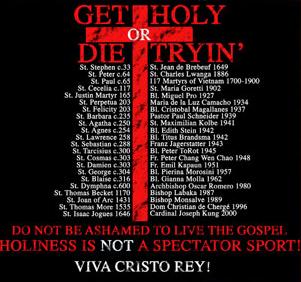
Get Holy or Die Tryin'


I realise that I typically use red to denote the words of Christ from Scripture. However, liturgically, red is the colour worn by the priests on feasts in honour of the Martyrs. Over the school year, when a title on this blog is in red, the post will be telling the story of one such martyr.

Last summer, I went down to the Franciscan University of Steubenville's annual youth conference (which rocked out loud, and we'll be going as a youth group next year!), and while I was there, I explored the gift shop and found the t-shirt pictured above, made by Catholic to the Max.com. I saw it, and had to get it, mainly because St. Jean de Brébeuf topped the second column, and, being a Canadian martyr, my patriotism swayed my decision against other very cool t-shirts. At the time that I bought the shirt, I did not realise that it was, in fact, a parody of 50 Cent: Get Rich or Die Tryin'. I just thought that it was a wicked shirt, with martyrs on the back, and a slogan that we as Catholics should all aspire to: Get Holy, or Die Tryin'.

Now that the school year is back in full swing, and I'm back visiting the elementary schools' senior grades, I've decided, instead of just preachin' at them, to tell stories instead--and the stories I have to tell are those of the martyrs (particularly those on the back of my t-shirt, listed above). Now, there are 44 listings on the shirt, and less than 44 weeks in the school year, so we won't cover all of them. But I will select the ones that I think have the most captivating, inspiring, and challenging tales (a difficult task, in light of the roster--but then, I feel I can be choosy, since the creators of the shirt themselves were choosy. If they included all the martyrs, the t-shirt would need to be a robe, covered front and back with their names!).

The fact that the t-shirt is a parody of 50 Cent's misguided motto adds further depth to the message. 50 Cent reflects the world's view of success: to be rich, successful, famous, and all that. In stark contrast, Jesus in the Beatitudes reminds us that it is the poor, gentle, mournful, hungry and thirsty for righteousness, merciful, pure in heart, peacemakers, and persecuted who are blessed and truly successful.

In the lives of the martyrs that we'll hear about, we will see all of these characteristics lived out as the Spirit of God makes these normal men and women, just like us, able.

While the world would look at a person who gives up their entire life in service of Christ, and is willing to even suffer persecution and death for that, as a fool and a failure, the Catholic Church views these people as Heroes to be looked up to and emulated. These are the Church's greatest success stories, and their impact on this world far surpasses their deaths. The ancient Christian writer Tertullian once remarked that the blood of the martyrs is the seed of the Church. Throughout history, and in our modern world, it is where Christians are persecuted that the Church is strongest and growing fastest.

The examples of the martyrs' lives on earth, and their prayers for the world, in heaven, continue to change the world we live in, in extraordinary ways. May we, filled with the Spirit of God, lead lives such as theirs.

As many a martyr said upon his death:
Long Live Christ the King!

Labels: , , ,

Thursday, December 15, 2005

Jesus Freaks

Quick question: Who wants to be a saint?
The Catechism of the Catholic Church describes a saint as someone who "practiced heroic virtue and lived in fidelity to God's grace" (paragraph 828). In other words, in order to become a saint, you gotta be a freak!
Jesus Freak
DC Talk

Separated, I cut myself clean
From a past that comes back in my darkest of dreams
Been apprehended by a spiritual force
And a grace that replaced all the me I've divorced

Saw a man with a tat on his big fat belly
It wriggled around like marmalade jelly
It took me a while to catch what it said
'Cause I had to match the rhythm
Of his belly with my head
'Jesus Saves' is what it raved in a typical tattoo green
He stood on a box in the middle of the city
And claimed he had a dream...

What will people think when they hear that I'm a Jesus Freak?
What will people do if they find out it's true?
I don't really care if they label me a Jesus Freak
There ain't no disguising the truth!


Kamikaze, my death is gain
I've been marked by my Maker, a peculiar display
The high and lofty, they see me as weak
'Cause I won't live and die for the power they seek

There was a man from the desert with maps in his head
The sand that he walked was also his bed
The words that he spoke made the people assume
There wasn't too much left in the Upper Room
With skins on his back and hair on his face
They thought he was strange by the locusts he ate
Y'see the Pharisees tripped when they heard him speak
'Til the king took the head of this Jesus Freak

What will people think when they hear that I'm a Jesus Freak?
What will people do if they find out it's true?
I don't really care if they label me a Jesus Freak
There ain't no disguising the truth!


People think I'm strange; does it make me a stranger
That my Best Friend was born in a manger?
People think I'm strange; does it make me a stranger
That my Best Friend was born in a manger?

What will people think when they hear that I'm a Jesus Freak?
What will people do if they find out it's true?
I don't really care if they label me a Jesus Freak
There ain't no disguising the truth!


What will people think [What will people think]?
What will people do [What will people do]?
I don't really care [What else can I say?]
There ain’t no disguising the truth [Jesus is the Way!]
All of the thousands of saints have this one thing in common: They were freaks! They were not normal in the eyes of the world! Think about it: the guy that the song talks about in the second verse--Here's a guy who lives in the desert, in camel skin, on a diet of locusts and honey, telling people that the Messiah is coming and they need to repent. The authorities didn't like that so much, and he got his head chopped off! Now we know him as Saint John the Baptist.

Or how about St. Francis of Assisi? Here's a rich kid, very popular, going to all the parties and hangin' with his friends--until one day he gets sick on the way to the Crusades, comes home, and while he's recovering he hears God speak to him! From that point on, he gives up all his wealth, his status, even his family name! He goes around begging for his food and preaching the Gospel, helping lepers, and even goes to the Crusades--not to fight, but to preach to the Muslims! People thought he was a fool; people thought he was crazy; people thought he was a freak. We think of him as a saint.

What about Joan of Arc? This is a girl in her early teens, who starts hearing voices, and listens to them! She dresses like a boy, joins the French army, and leads it to victory (despite whatever French jokes you may have heard)! Well, the English, those people whom Joan's conquests beat down, didn't like that so much, so they captured her, put her on a mock trial on trumped up charges, and still she didn't deny her faith. She was burned at the stake for serving God, and now we call her Saint Joan of Arc!

I could go on and on about people who have lived lives so radically, freakishly devoted to Christ, but one more example will suffice. We all remember Blessed Mother Teresa. She's not a saint, yet, but she will be! She was a woman who was called by God to go to India, where Hinduism has set up a caste system. On the bottom of the castes are the "dalit", or the untouchables. These are the poorest of the poor, and you don't talk to them, or feed them, or touch them. You don't acknowledge them at all! Unless, that is, you are a Christian--specifically, a small, in-your-face woman named Mother Teresa! She left everything that she had behind and went to India to minister to these people. Why? Because in their suffering faces, she saw the suffering Face of Christ!

The Bible talks about people like these. In Hebrews chapter 11, it talks about the Old Testament Saints, commending their faith and devotion. The chapter concludes with these words:
These were men who through faith conquered kingdoms, did what was upright and earned the promises. They could keep a lion's mouth shut, put out blazing fires and emerge unscathed from battle. They were weak people who were given strength to be brave in war and drive back foreign invaders. Some returned to their wives from the dead by resurrection; and others submitted to torture, refusing release so that they would rise again to a better life. Some had to bear being pilloried and flogged, or even chained up in prison. They were stoned, or sawn in half, or killed by the sword; they were homeless, and wore only the skins of sheep and goats; they were in want and hardship, and maltreated. They were too good for the world and they wandered in deserts and mountains and in caves and ravines.
Chapter 12 begins by bringing their example home to us:
With so many witnesses in a great cloud all around us, we too, then, should throw off everything that weighs us down and the sin that clings so closely, and with perseverance keep running the race which lies ahead of us. Let us keep our eyes fixed on Jesus, who leads us in our faith and brings it to perfection: for the sake of the joy which lay ahead of Him, He endured the cross, disregarding the shame of it, and has taken His seat at the right of God's throne. Think of the way He persevered against such opposition from sinners and then you will not lose heart and come to grief. In the fight against sin, you have not yet had to keep fighting to the point of bloodshed.
We must be willing to follow Christ, even if that means that we have to sacrifice our coolness, or our popularity, or even our wealth. We must be willing to stick with Him, even if it costs us our freedom, or even our very lives. We must be willing to be Jesus Freaks.
The bridge of the song asks us,
People think I'm strange; does it make me a stranger
That my Best Friend was born in a manger?
First of all, is Jesus your best friend? If you can't honestly answer "yes" to that question, then something needs to change in your heart. Jesus said that He no longer calls us "servants", but "friends" (John 15:15), but right before that, He says that His friends do whatever He tells them (v. 14). Are you willing to do that? Are you willing to be a stranger for the One who was born in a Manger?

Have a freakish Christmas!
God bless!

Labels: , , , ,

Tuesday, November 01, 2005

All Saints' Eve Party!

Alright, if you missed this, because you thought you had better things to do with your night on Hallowe'en, YOU WERE WRONG!

Yeah, so last night was our hallowe'en "alternative" party. Although, really, having an All Saints' Eve party really isn't an alternative to Hallowe'en, since Hallowe'en is short for "All Hallowed Evening". "Hallowed" is "Holy" like in the "Our Father": "Hallowed be Thy Name." So "All Hallowed Eve" is "All Holy Eve", and "Saints" means "Holy Ones". So in actual fact, "Hallowe'en" is in fact the alternative to the ancient pagan holiday "Samhain". If you want to know what the heck I'm talking about, read the post below this. If you want to hear about the awesometastic Hallowe'en party, read on!

So from 6:00pm-9:00pm last night, we had a party in the Parish Centre at St. Andrew's Church. Shortly after 6, when most of the people who were coming (8 came for the whole night, and 4 others were there for part of the night, plus Melissa and I. I think that's a pretty good turn-out, especially considering the competition!) I opened with a word of prayer asking God for a fun and safe night, and then read Hebrews 12:1-2:

With so many witnesses in a great cloud all around us, we too, then, should throw off everything that weighs us down and the sin that clings so closely, and with perseverance keep running in the race which lies ahead of us. Let us keep our eyes on Jesus, who leads us in our faith and brings it to perfection: for the sake of the joy which lay ahead of Him, He endured the cross, disregarding the shame of it, and has taken His seat at the right hand of God's throne.


After that, I read to them "The Martyrdom of Polycarp" to realise just what some of these "Cloud of Witnesses" had gone through, knowing that they were watching and praying for us in Heaven now. After that, we began the party with candy and chocolate and chips. We'd planned various activities and had great prizes for the winners. The first of these was "The Great Saint Search". Melissa (my wife, if you're new here) and I looked up 8 random saints online, and prepared brief biographies on them. Then we drafted a list of 20 questions. We hid the saint bios throughout the parish centre, and the one who got all the correct answers first won. (The saints, if you are interested, were St. Anne, St. Polycarp of Smyrna, St. Gregory the Great, St. Catharine of Sienna, St. Francis of Assisi, St. Joan of Arc, St. Thér?se of Lisieux, and, of course, St. Andrew the Apostle.

The winners of the Saint Search were Dez and her friend Mike, who each received $2 of Tim Horton's gift certificates (If someone had done it solo and won, they would have got the whole book of $5).

Later, we had a Pumpkin-Carving contest. The winners were the sister-brother team of Monica and Stephen S, who carved very beautifully, "I <3 Greg" into their pumpkin. How could I turn that down? (Actually, the other team copied that idea, but Monica and Stephen's pumpkin was much more aesthetically pleasing). For their troubles, they received $2 each of McDonald's gift certificates.

Throughout the night, we asked Bible Trivia questions, and the one with the correct answer received a Hallowe'en-sized chocolate bar. We also drew some door prizes, and Steve F. won a hackey-sack with a glow-in-the-dark shock sensor. Monica got a cool magnetic pad. But the ultimate door-prize was still to come, as was the best costume award.

Later in the night, we played a "Christianised" and All Saints appropriate rendition of the wink-murder style game, "Mafia", called "Persecution". The scenario is that the players are Christians in the Early Church, which is being persecuted by the Roman Empire. The Emperor (not actually a player) has hired two spies to infiltrate the Christian Church and betray Christians to him to be executed. The Bishop of the church has the responsibility to protect his flock, and must root out and excommunicate the spies before all the Christians have been martyred. At the beginning of the game, everyone's heads are down in the circle, and the narrator (who has the pleasure of describing the glorious manner in which the saints were...united with Christ) selects the spies, and then selects the Bishop.

Then the spies select one of the Christians to report to the Emperor. Once they put their heads down, the Bishop looks up and tries to select a spy to excommunicate. Then everyone brings their heads up and the narrator tells of the manner in which the Christian singled out by the spies meets his or her demise. After that, if the Bishop guessed right, then one of the spies is excommunicated. (If he guesses wrong, that segment of the round is skipped.) The whole church responds to the martyrdom by selecting a member within the ranks and asking the Bishop to excommunicate that one. In this way, if you guess right, both spies could be caught right away! But if the people guess wrong, then an innocent Christian is excommunicated. Then everyone's head goes down and the cycle repeats until either all the Christians are executed or until the two spies are excommunicated. The fun is in the narrator's story-telling. And, last night, just as in the real world, the Church never lost!

At the end of the night, we awarded Dez with the best-costume award for her portrayal of St. Maria Gorretti, a teenager in the early part of last century who was stabbed numerous times for her faith in Christ. Dez received a $5 gift card to Second Cup.

After that, we awarded the grand door prize to Joe, who received a $20 gift card to HMV!

The party was a blast, and is now an annual tradition at St. Andrew's Church!

I'll add pictures later!

Labels: , ,

Happy Hallowe'en...?

The following was the write-up I did for Sunday's bulletin. I thought I'd reproduce it here, since I haven't blogged in a while. I edited it so it's not talking about "tomorrow night" anymore, but "last night", etc.

Last night was Hallowe'en, and every year among devout Christians, this odd little holiday always seems to stir up some controversy. "Is it right for me or for my children to participate in such an evil-looking holiday?" It's a valid question, especially since the Bible plainly tells us to avoid the very appearance of evil (1 Thessalonians 5:22).

But isn't it all just harmless fun? I thought a brief history lesson might help sort this all out. In ancient England, Scotland, and Ireland, long before they were called such, "Hallowe'en" was a pagan holiday known as "Samhain", observed as a "day of the dead" by the Celtic people. It was, all in all, a fairly nasty party (with the scariness, ghost stuff, and even human sacrifices playing a role). This bit of "fun" spread to Rome when it conquered Britain in around AD 45.

But there's more to this story (here's the good part). The Christian Church continued to grow and spread the Gospel, and, many times was persecuted. Many martyrs gave their lives for the sake of the Gospel, and the Church wanted to honour them. Later, many people who lived exemplary lives, but weren't martyred necessarily, were also to be honoured by the Church as Saints. In the 8th century, Pope Gregory III consecrated a basilica to honour all these saints and martyrs (who had grown so numerous already, that individual dates were impossible to set!) and dedicated it on November 1st.

Why did he pick that day? Because the Church has this beautiful practice of converting not only people, but cultures. And what part of a culture is more in need of converting than a pagan, human-sacrificing, day of the dead? A holiday that already honours the dead very easily converts to one that honours the saints--especially once the rather evil pagan practices are quite done away with. Well, not quite 100 years later, Pope Gregory IV comes along and likes this idea, and declares that November 1st is to be observed as "All Saints Day" by the entire Church. And October 31st is its vigil.

And so, yesterday, we remembered not that ghouls, goblins, and ghosts are returning to torment us, but rather, we acknowledged and thanked God for the lives of His Saints who spread His Gospel to the nations. If our morbid society likes the darker aspects of Hallowe'en, then I suggest that it is not a time to condemn and reject the world, but in its day to celebrate darkness, let us, like the saints who have gone before, shine as an increasingly bright light in the midst of the darkness!

Labels: , , ,

Friday, September 23, 2005

Saint Doubting Thomas

Detail of Caravaggio: 'The Incredulity of Saint Thomas'
Over the next several weeks, the grade nine classes of St. Thomas Aquinas are having retreats here at St. Andrew's Church, to help get the freshmen off to a great spiritual start to their high school careers. I was asked to be a part of the retreat, and as the theme was how Jesus meets us in the challenges of high school, and overcomes them, I thought I'd offer a meditation on one of my heroes of faith, St. Thomas the Apostle.

I want to read a passage of Scripture to you, about a fairly famous fellow in the Bible, though, sometimes not one with the greatest of reputations. He's one of my heroes though, particularly because of this story--and I think his story will provide some encouragement for you as well, as you begin your journey through high school. But you'll see what I mean.

John 20:19-29
In the evening of that same day, the first day of the week, the doors were closed in the room where the disciples were, for fear of the Jews. Jesus came and stood among them. He said to them, 'Peace be with you,' and, after saying this, He showed them His hands and His side. The disciples were filled with joy at seeing the Lord, and He said to them again, 'Peace be with you.
'As the Father has sent Me,
so I am sending you.
'
After saying this He breathed on them and said:
'Receive the Holy Spirit.
If you forgive anyone's sins,
they are forgiven;
if you retain anyone's sins,
they are retained.
'
Thomas, called the Twin, who was one of the Twelve, was not with them when Jesus came. So the other disciples said to him, 'We have seen the Lord,' but he answered, 'Unless I see the holes that the nails made in His hands and can put my finger into the holes they made, and unless I can put my hand into His side, I refuse to believe.' Eight days later the disciples were in the house again and Thomas was with them. The doors were closed, but Jesus came in and stood among them. 'Peace be with you,' He said. Then He spoke to Thomas, 'Put your finger here; look, here are My hands. Give Me your hand; put it into My side. Do not be unbelieving any more but believe.' Thomas replied, 'My Lord and my God!' Jesus said to him:
'You believe because you can see Me.
Blessed are those who have not seen and yet believe.
'

I love St. Thomas the Apostle. I have to say, he's definitely one of my favourite disciples of Jesus (if I had to rank them, I'd put him probably at number 2, behind John). He is definitely one of my heroes of faith. Hold up, what? A hero of your faith?! We are talkin' about Doubting Thomas, right? Like, the one that doubted. How can he be a hero of faith?! Yes, Doubting Thomas is one of my heroes. He's gotten a bit of a bad rap throughout history. He's that poor excuse for an Apostle. "That's the doubter!" "He didn't have faith!" "He had to see to believe!" "What kinda weak, wishy-washy, lameoid disciple is that?!"

See, I like Doubting Thomas 'cause he's real. He's human, like me. Here's a guy who spent the last three years of his life following Jesus around, firmly believing that Jesus is this big ol' Messiah come to save the world. He's the greatest guy who ever lived. He's travellin' around, preaching about God and His Kingdom, and healing people, doing all kinds of miracles, and really just blowing people away. Then things got nasty, and Jesus' wonderful preaching, healing, miracle-working Messiah-tour got cut short. He was arrested and then Crucified! Thomas' teacher, his best friend, his hero--and they killed Him!

So I figure Thomas is rather shaken up by all of this. His whole identity and sense of purpose just got pinned to a big nasty tree. He's probably wandering around in a depressed stupor, and totally misses the next three days. When he finally gets it together, he's probably thinking, "What the heck am I doing?! If they killed Jesus, they're probably comin' after me next! I gotta find the guys! Safety in numbers and all!" So he heads back to the Upper Room, seeing if maybe Peter or John are hanging around still. When they unlock the door, Thomas walks in on what seems to be some kinda crazy celebration, and he's like, "What on earth are you guys doing?! Jesus is dead, and you're partying! What's the matter with you?!" So Peter probably says, "Thomas! Guess what! He's alive! He was here!"

Now, if I was Thomas, here's what I would have said: "Are you off your nut? Pete, that is probably the sickest joke you could pull on someone!" I mean, seriously, if you knew my best friend had just died, and I came up to you excited as all get out, saying, "Dude! You're never gonna believe this! My best friend is alive! He just came to visit me today!" You're gonna be thinking I'm ready to check into the funny farm! You're gonna want proof. I mean, if you believed me, your picture would be beside "gullible" in the dictionary!

I think Thomas handled it pretty well, though. I mean, he didn't hit Peter or nothing. "Yeeeeaaaaah, ooookay. Petey, here's the deal. If I can put my fingers in the scars on his hands, and poke the hole in his side, I'll believe you." And so, Thomas goes down in history as the weak-faithed disciple.

But wait, that's not the end of the story! Eight days later, our buddy Thomas is still hanging out with the other disciples (because really, where else is he going to go?), and they're still insisting that they saw Jesus ('cause you just don't drop that kind of thing!).

So get this, they're all together in one room, the doors are shut, and the place is locked up tighter than Fort Knox for fear of the Jewish authorities, when BAM! Jesus is right there in the middle of the room! No doors open or nothing! I tend to picture the scene like this:
Peter: Tommy! I'm telling you, He was here!
Thomas: Look Pete, I said it before, and I'll say it again! Give it up!
Peter: Tom, I'm not.......
Awkward silence, wide eyed stares at something behind Thomas.
Voice: Peace be with you!
Thomas, jumping nearly out of his skin and spinning around: GAH! I mean, uh...GAH!
Jesus: Hey Tom, I can see you're having a little trouble with all this.
Thomas: Bluh...
Jesus: Look, here's My hands and My side. Don't be unbelieving anymore!

And Thomas, who was formerly doubting, drops to his knees and gives the greatest statement of who Jesus Christ is, in all of Scripture: "My Lord and my God!"

So I want to encourage you tonight. You're at a point in your life where doubts are coming at you, left, right and centre. Of all the things grabbing for your attention--popularity, sex, drugs, sports, teams, homework, and whatever else--very little will be encouraging you to actually seek Jesus, or give a rip about Church or religion. Most things that will come up in your high school life will actually seek to pull you away from your faith. But last year you were confirmed into your faith. You chose to stand up and be anointed, to say, yeah, I want that Jesus thing! But now, a year later, you're like, yeah. I'm an adult Christian. I got the oil of the Spirit...but I don't really feel all that different. What was the point? Was it all just kids stuff? "I can't be a missionary! I don't even believe in Jebus!"

But let me tell you, Jebus...I mean, Jesus believes in you! He loves you! He doesn't sit up in Heaven saying, "Oh oh, that kid's doubting again! Man I've had it with them! Pfft!" Rather, just like He did for Thomas, He's willing to do for you--to come down to your own level and meet you where you're at, if you simply ask Him! But if you hold on to your doubts, if you hide them inside, they'll fester inside you and eventually swallow you up. Jesus wants you to give them to Him. That's why He's given you your teachers, your chaplain, me, the priests at St. Andrew's, and the other wonderful and wise saints in your life. We're here to support you, not kick you when you're down! We aren't perfect. We each have our own doubts and struggles, too. Show me a person who never doubts his faith, and I'll show you a person who never thinks about his faith.

And ultimately, Jesus is right there with you. Don't be afraid to trust Him. He's a lot bigger than your doubts. He's a lot bigger than your problems! Give Him your doubts, and He'll give you a faith that's stronger than ever!

God bless.

Labels: , , ,

Thursday, March 17, 2005

"No Reason Except the Gospel": Saint Patrick of Ireland

Patrick Yay Pictures! Just a brief interlude in honour of the day! Happy St. Paddy's everyone! Here's the real story of a person who knows what last Sunday's talk was all about!

The year was A.D. 432. It was Saturday, May 1st, at eventide. To some, the day was known as Beltane, but to the man traversing the hill of Slaine, it was Easter Saturday and he was intending to light the paschal flame.

As a part of the druidic rites of Beltane, the druids were due to light a sacred flame on the hill of Tara and no other fires were to be lit before it. Defiantly, this man rose to the top of Slaine, and set to lighting his vigil bonfire, while his friends and followers stood around. As the druids assembled at Tara, they could see the fire burning on the hill of Slaine opposite them with the stranger standing before it, holding a croizier and a bell. These druids were outraged, and explained to the king, Laoghaire, that the fire must be extinguished, or it would burn forever and consume the island! The king consulted the man and he was persuaded to let the fire burn. The man’s name was Patrick, and this is how he lit the fire of Christianity in Ireland.[1]

Who was Patrick, who so boldly defied the status quo? Are the common legends and stories true? Who was the man behind the parades, the green clothes, and the beer? What did he really face when he came to Ireland?

The Roman Empire, as it spread throughout Europe, never was able to overtake Ireland, and so during its occupation, as Christianity spread throughout the Known World, Ireland remained staunchly pagan. Magic was the principle religion, and druids were the Island’s priestly caste. Druids exercised an absolute control over the kings and chieftains of Ireland.[2] Such was the religion and lifestyle of the people to whom St. Patrick came, but his first steps on the green hills of Erin were not as a missionary; no, not even as a free man.

Patrick was a British Celt, the son of a deacon named Calpornicus, and the grandson of a priest named Potitus. However, this religious heritage had not taken hold of the youth. Patrick writes in his Confession that in his youth he “did not know the true God.”[3]

When Patrick was sixteen years old, raiding parties came and attacked his village. He was taken as a slave with many others to Ireland. He was sold to a chieftain named Milchu, and tended his sheep, cattle, and pigs for six years in Ulster. All this time of harsh slavery, Patrick reflected on his spiritual state, remembering his Catholic upbringing. On the fields and in the mountains, Patrick began to pray and cry out to the Lord.[4] These times of prayer became daily routine, and beyond routine, as the Spirit of God became real to him. St. Patrick writes in his Confession:


But after I had come to Ireland I daily used to feed cattle, and I prayed fervently during the day; the love of God and the fear of Him increased more and more and faith became stronger, and the spirit was stirred; so that in one day I said about a hundred prayers, and in the night nearly the same; so that I used even to remain in the woods and in the mountain; before daylight I used to rise in prayer, through snow, through frost, through rain and felt no harm; nor was there any slothfulness in me, as I now perceive, because the Spirit was then fervent within me.[5]

At the end of six years, God answered Patrick and gave him instructions how to go home. This is Patrick’s account:


And there indeed one night, in my sleep, I heard a voice saying to me, “Thou fastest well, thou shalt soon go to thy country.” And again, after a short time, I heard a response saying to me, “Behold, thy ship is ready.” And it was not near, but perhaps two hundred miles away, and I never had been there, nor was I acquainted with any of the men there. After this I took flight, and left the man with whom I had been six years; and I came in the strength of the Lord, who directed my way for good; and I feared nothing till I arrived at that ship.[6]

At age twenty-two, Patrick escaped home to Britain and promised his parents that he would not leave again. However, God had other plans, and Patrick’s heart became burdened for the people who had held him in slavery.[7] As was so common in Patrick’s life, it was in a dream that God commissioned him to Ireland. He writes:


And then I saw, indeed, in the bosom of the night, a man coming as it were from Ireland, Victoricus by name, with innumerable letters, and he gave one of them to me. And I read the beginning of the letter, containing “The Voice of the Irish”. And while I was reading aloud the beginning of the letter, I myself thought indeed in my mind that I heard the voice of those who were near the wood of Foclut, which is close by the Western Sea. And they cried out thus as if with one voice, “We entreat thee, holy youth that thou come, and henceforth walk among us.” And I was deeply moved in heart, and could read no further; and so I awoke. Thanks be to God, that after many years the Lord granted to them according to their cry![8]

He returned to Ireland as a missionary in A.D. 432. He was embarrassed by his lack of formal education, and referred to it countless times in his Confession, calling himself “the rudest and the least of all the faithful”[9] and “a rustic, a fugitive, unlearned.”[10] Despite this, St. Patrick was used mightily of God, and it is said that he brought a hundred and twenty thousand people to faith in Christ.[11]

Patrick was an itinerant minister, circuiting Ireland and establishing churches. He established more than three hundred churches, bringing in clergy from Britain and Gaul (France) to nurture the new believers. He referred to himself as “a resident of Ireland”, refusing to tie himself to any county or city. He travelled on foot until he was too old to do so, and then he took to chariot.[12] It is estimated that St. Patrick died around 461 at Saul (now Saul Patrick), and was buried at Armagh, the location of Ireland’s central church.[13]

St. Patrick was a very humble and self-conscious man, almost to the point of an inferiority complex. He had a lot of self-doubt and insecurity, particularly about his lack of education. He felt himself unworthy of the office of Bishop. His lack of skill caused him to be extremely dependent on God, and in prayer constantly. He thanked God, and accredited his own ability to do the work to God alone. It was God who gave St. Patrick the wisdom and the words. He says, “Whence came this wisdom to me, which was not in me, I who neither knew the number of my days, now was acquainted with God?”[14] God had an intimate involvement in Patrick’s life, and talked to him, often in dreams.

St. Patrick was a dreamer in the Biblical sense. He had a dynamic and mystical relationship with God, and a deep prayer life. God spoke to Patrick through dreams and Patrick records upwards of eight dream experiences in his Confessions. It was through a dream that St. Patrick knew to escape Ireland, and it was through a dream that God sent him back.[15]

Contrary to the mythical and legendary portrayals of St. Patrick as a stern, dogmatic, stoic preacher, he was actually a feeling, passionate man. He was never without fear, as he was always feeling the struggle between good and evil, Christianity and Paganism, God and Satan.[16] However, St. Patrick was also full of love, a love that balanced, but never neutralised, the fear. His whole life could be considered a movement toward that perfect love that casts out all fear (1 John 4:18).[17] He looked his enemies in the face, both human and demonic, but he remained very vulnerable, full of fears and tears.

During his ministry, St. Patrick preached the simple Gospel. He was very well versed in Scripture, making reference to it or alluding to it about one hundred times in his Confessions.[18] St. Patrick travelled from county to county, preaching to the chieftains and kings. This approach led to his success in evangelising Ireland, and it has been said that the original conversion of the Irish was accomplished with less bloodshed than any other considerable nation in Europe.[19]

St. Patrick was also the first Christian to speak out strongly against slavery. As one who had been a slave himself, Patrick could closely identify with the horror and atrocities of slavery. Within his lifetime, St. Patrick had abolished the entire Irish slave trade.[20]

St. Patrick encouraged the founding of monasteries, but unlike many of those on the Continent, the Irish monasteries were not removed from society. In fact, they were a society in themselves, with every station present, from priest to blacksmith to farmer.[21] Celtic monasteries were centres of worship, scholarship, industry, and missionary activity.[22] The Irish loved the Bible, and they played a big part of spreading the knowledge of the Scriptures in Europe during the Dark Ages.[23] Eventually, through the work of St. Patrick, Ireland would become a centre from which Christian influence was spread not only to Britain and Scotland, but also to much of Western Europe as well, through the missions work of people such as Saints Aidan and Columba.[24]

St. Patrick, as is seen through the work he accomplished and the life he lived among the Irish, was truly a missionary. After being a captive slave in Ireland, St. Patrick’s love of God was truly his only reason for returning. He writes, “I testify in truth, and in joy of heart, before God and His holy angels, that I never had any reason, except the Gospel and its promises, for ever returning to that people from whom I had formerly escaped with difficulty.”[25] Truly, for a man or woman of God, the Gospel should be the only reason one needs.

St. Patrick’s humility and fear are prominent in his Confessions, and he never puts it so aptly as when he describes himself as parvitas mea: “my littleness”.[26] This thought consumed St. Patrick, and continually brought him before God for strength. God does not call people for their strengths, but is glorified in them through their weaknesses. Each Christian should live with the awareness of his or her littleness, and forever balance that by depending on God’s grace daily. Thus was Saint Patrick.

[1] Iain Zaczek, Irish Legends. Prospero Books, 1998. p.121.
[2] T. W. Rolleston, Celtic: Myths and Legends. Senate, 1994. p. 59.
[3] “The Confession of St. Patrick”, translated by C. H. H. Wright, is taken from Appendix A of Noel Dermot O’Donoghue’s Aristocracy of Soul: Patrick of Ireland. Michael Glazier, Inc., 1987. pp. 101-118.
[4] Roger C. Palms, “Patrick of Ireland; Slave. Missionary. Man of God.” Decision Magazine, March, 1999. pp. 28, 29.
[5] “The Confession of St. Patrick”, from O’Donoghue. p. 105.
[6] Ibid.
[7] Palms, “Patrick of Ireland”.
[8] “Confession”. p. 107
[9] Ibid. p. 101.
[10] Ibid. p. 104.
[11] Palms, “Patrick of Ireland”.
[12] Katharine Scherman, The Flowering of Ireland. Little, Brown and Company, 1981. p. 96.
[13] Palms, “Patrick of Ireland”.

[14] “Confession”. p. 110.
[15] Noel Dermot O’Donoghue, Aristocracy of the Soul: Patrick of Ireland. pp. 11-23.
[16] Ibid. p.59.
[17] Ibid.
[18] T. G. Wallace, Our Debt to the Celtic Church. Sutherland Press, 1954. p. 37.
[19] Ibid. pp. 38-39.
[20] Mary Cagney, “Patrick the Saint”. Christian History, 1st Quarter, 1998. pp. 14-15.
[21] Wallace, p. 78.
[22] Ibid. p. 82.
[23] Ibid. p. 86.
[24] Palms, “Patrick of Ireland”.
[25] “Confessions”, p. 117.
[26] O’Donoghue, p. 27.

Labels: ,